Leaves of insight, before they disappear

6130889443_74c365a02b_b Here are three quotations from my reading over the past few weeks. Each has something to do with writing, even when it is not about writing.

1.
In this profile of Dr. Steven Zeitels (“Giving Voice,” John Calopinto, New Yorker, March 4), who is the surgeon who saved Adele’s voice, another patient, Scott Flaherty, “an operatic tenor… working as a teacher,” describes his motivation for undergoing risky surgery to restore his singing voice:

He explained [to Colapinto] why teaching was no longer satisfying. “I’ve grown tired of just talking about it,” he said. “I mean, when you sing you’re giving voice to your soul.”

Teaching singing to singing parallels the relationship of teaching writing to writing. It’s not enough to talk about or comment on. And yet that seems to be mostly what there is time for. This was my mournful state of mind in the weeks leading up to Spring Break.

2.
The playwright Annie Baker (“Just Saying,” Nathan Heller, New Yorker, February 25) also teaches in the graduate playwriting program at NYU. In his profile of her, Heller follows Baker and her playwriting students into the basement of a Washington Square bar, where they discuss the pressure to outline screenplays. Baker is wearied by them and negotiates her contracts to avoid outlining. She says

“I feel like it’s the most dangerous — I actually feel like Hollywood hurts itself when everybody outlines screenplays. And then it trickles down to grad writing programs. Like, I’m willing to sit around for hours to talk about what the screenplay’s going to be, and talk about ideas, and doodle diagrams on dry-erase boards, but I just won’t…. Because by the time I finish the outline, it’s dead.”

Talking and drawing can be explorative and generative when it comes to creative writing. But outlining: a killer. Too much left brain.

3.
Piano player Jason Moran (“Jazz Hands,” Alec Wilkinson, New Yorker, March 11) lives in New York but teaches once a month at the New Conservatory of Music in Boston. In tutoring Jiri Nedoma, who played his own composition once hesitantly and again with more sureness, Moran directed him to play it again, changing “the whole idea of the song”:

“Make it entirely different. Could you play it in stride piano?” […] Put different factors into the equation. Play it backward. Upside down. Your left hand might use something 1940 and your right hand is 2000, and what you find becomes part of your vocabulary.”

Nedoma played it again: “more delicate,” with richer chords. “He ended with a series of rising notes.”

Moran responded

“What you played at the every end, that’s where you should start… It’s almost like you played all that prelude just to find that little bit.”

Play, play, play. Mess it up. Experiment in unlikely ways. Often, you discover what you’re writing about at the very end — that’s what we tell students. It seems like this is true in other kinds of composition. What is found, at the end, becomes the new start. Not everyone, though, will have the perseverance to revisit one’s own work with the eyes of new discovery.

—–
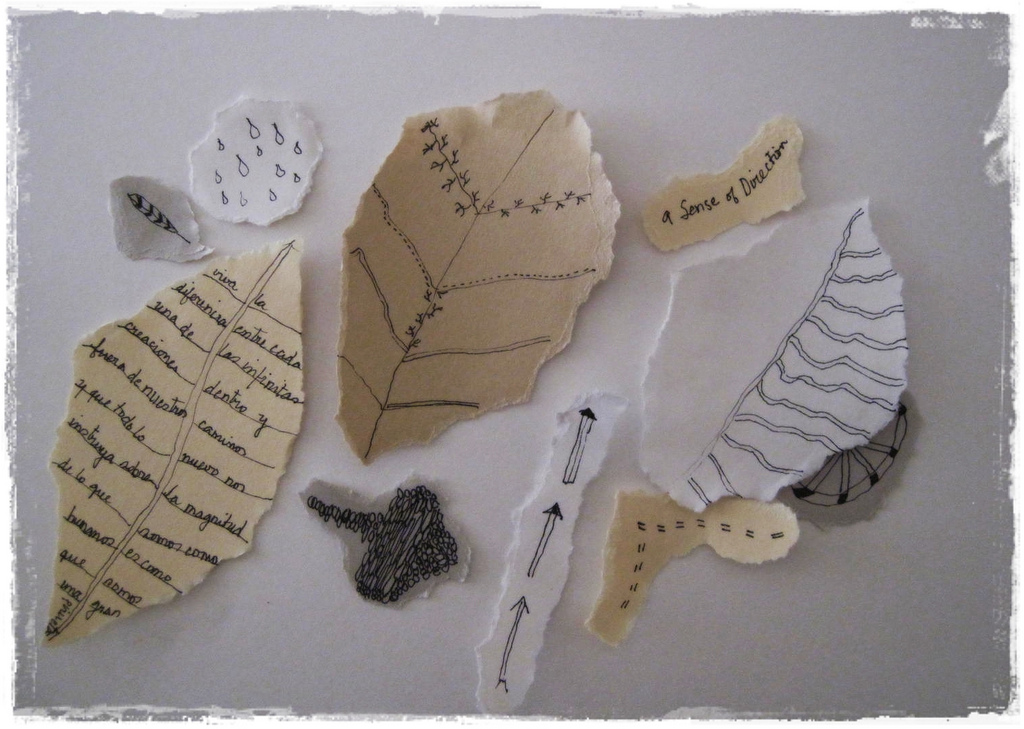
Image, “A Sense of Direction,” by Constanza on Flickr via a Creative Commons license
Cinderella goes to the ball

Cinderella is Grace, and the ball is a Bat Mitzvah.

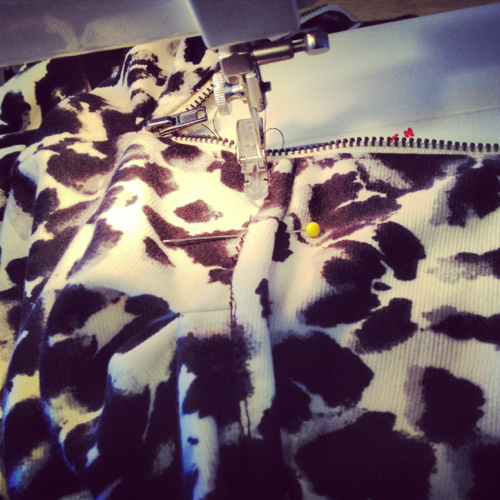
Today our house was a scene of cottage industry. I altered the dress I bought for Grace in the women’s department. The style and fabric were exactly what she wanted, but it was too drop-waisted, too long for a 5′ 1″ girl. Out came the sewing machine and ironing board.

sew dress 500

Meanwhile, Jimmy drove Cinderella to Target to buy some tights. He was shooed away by his daughter from the Intimates section of the store. I asked him where he lingered while waiting.  “Electronics,” he replied, with a tone that conveyed, “Where else?”

Later, I assisted with nail polish and jewelry selection and fastening. The black cardigan sweater, bunched up since the last occasion, needed some sprucing up with a damp cloth.

A check was written and greeting card found. Cinderella did her own makeup, and she is good at it.

wear dress 500

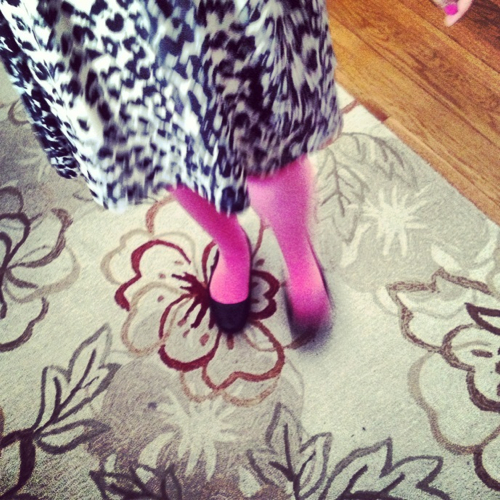
Purse, phone, hairbrush, and coat were gathered. Black slippers were slipped on.

I took some pictures.

Her carriage arrived. She went.

The ball, at a hotel in the adjacent town, ends at 11:30pm. Cinderella will be home around the stroke of midnight, in her customized dress, not-glass slippers, and pink tights from Target.

Precise, and soft at the edges

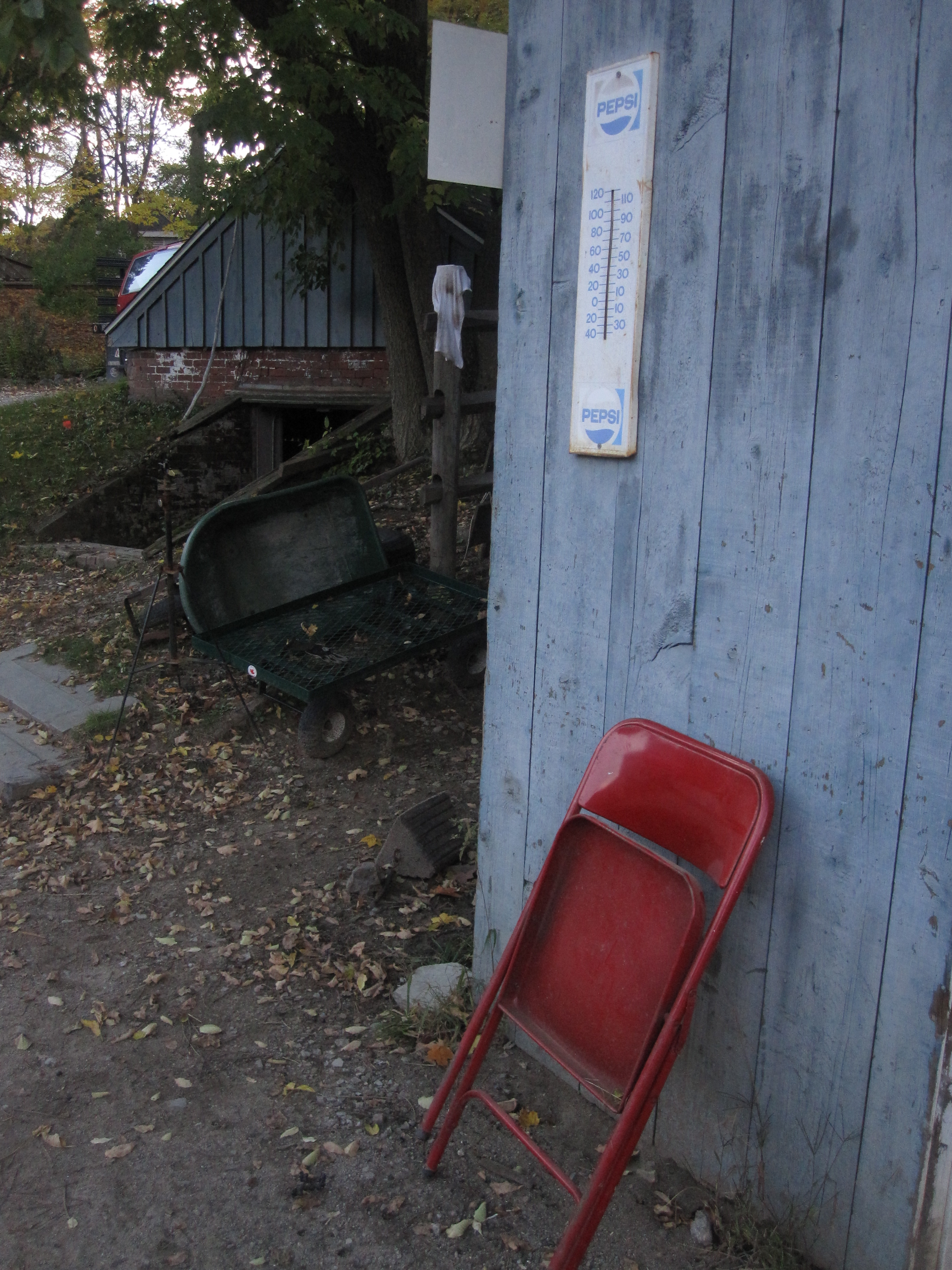
Red chairOverheard: A young instructor, after lab this week, to a another instructor, “My relationship to perfectionism has changed since I’ve become paralyzed.” She is in a wheelchair.

I hadn’t yet been part of this conversation. My ears perked up, I shuffled over, and I said to her, “You could write about that. I don’t think I’ve ever read anything with any personal insight into that topic from your point of view.”

We talked for a while about laundry folding and kitchen arrangement. Except for me, the group was made up of engineers, people whose work depends on attention to detail. When does attention to detail become perfectionism? I suspect there’s a continuum.

When I have been characterized as perfectionist, it feels like an accusation. The person saying it doesn’t admire the trait or its outcome (e.g., neatly folded sheets in the linen closet, a well-edited memo). Or it’s a way of distinguishing him or herself from me, as in, “You (Jane) are so uptight. I am easy-going.”

I don’t think of myself as desiring perfection, per se. Yet I do desire — and like, feel peaceful with — order, thoroughness, and the well-wrought detail.

Funny, I just had an impulse to make an annotated inventory of what parts of life or the physical world seem more pleasing to me if they are in line with my standards. It might start like this:

  • kitchen cabinets: stuff should be categorized, not stuffed-in randomly
  • closets and bureaus: neat, folded, unstuffed
  • desk: clear surface, things put away
  • yard: neat, trimmed, branches picked up — however, I don’t like a precise, manicured look — there has to be softness around the edges… and yet there are edges…
  • natural world: I like to see fallen branches, puddles, rusted cans among leaves, and yet I usually get to these places via a well-made path, which I like
  • writing: I prefer a fully-explored draft, even over-stuffed with ideas or information and long sentences, yet I want a finished piece to have shape, flow, grammar, and an absence of cliché, which to me is a kind of inexcusable clutter

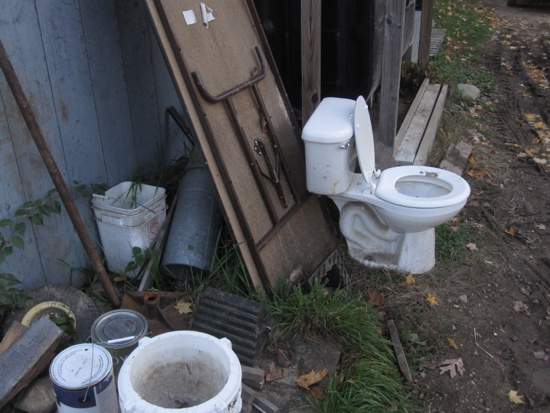
Toilet outdoorsAs time passes, and therefore there is less time in front of me, I let some perfectionist tendencies go. One does this also as a parent, as soon as you recognize that your infant is a wild thing. Students, too, have minds of their own.

But I hang on to others — performance at work and art and in the primary relationship(s) — and in some ways exacting standards are hampering.

To chew on some more.

—–
Photos taken October 21, 2012 at Allandale Farm by me.