Paddle out, paddle out

At some point, the ideas become too many, and the pressure to write them becomes too great. The documentation of real life has its limits. Fiction seems roomier, or at least different.

So I begin. I start in a place I know, the setting for the story I have imagined. I writer, stop, write. The story starts traveling far away from the point I imagined the protagonist would travel to. I don’t know where she is heading anymore.
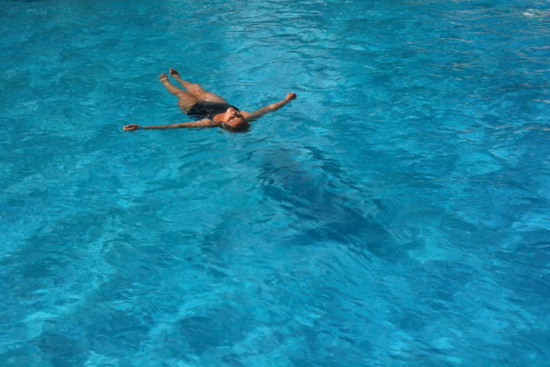
summer 2012

summer 2012, south boston swimming pool

I tell James, during our weekly hangout, “It’s like I’m swimming out, past the lifeguard buoys, and I keep going.” I wonder if I should turn back — to try forcefully to get back to the place the story began for me. But it’s going somewhere else.

James says, “It’s okay if you keep swimming out. That’s the good thing about metaphors.”

It’s true. I won’t drown.

What may be happening, he explains, is that in fiction we are writing a bunch of things at once, and wanting to deal with them all at the same time. “All these things come into the mind all at once” — and this is motivating, it keeps us going — but we have to deal with them separately, one or two at a time to give them the depth that the story wants.

And this going out, farther and farther, this might change the story.

Paddle out.

“Anxiety is based on the assumption that there is this perfect version of the story waiting to be unveiled,” he adds. “But there is not only one way; there’s a bunch of ways.”

Paddle out.

“Because it’s writing, you can stay out for weeks at a time. You’re not going to starve. You’re not gonna die of dehydration.” He pauses and laughs at his own joke in advance: “And maybe you’re a whale.”

I laugh, too, picturing myself.

That means I can dive under deep.

“But all the possibility is out there, so why would we tether ourselves to the land?”

I do not know where the story will go. I write, the narrative meanders, and I have to adjust my vision of it. And then I go farther, the story changes, and the vision is adjusted again. The story feels as though it is a few inches in front of my understanding, and I take a stroke, float closer, and it floats a few inches away again.

So I paddle towards it. I wonder if finishing will feel like getting back to shore, or reaching an island.
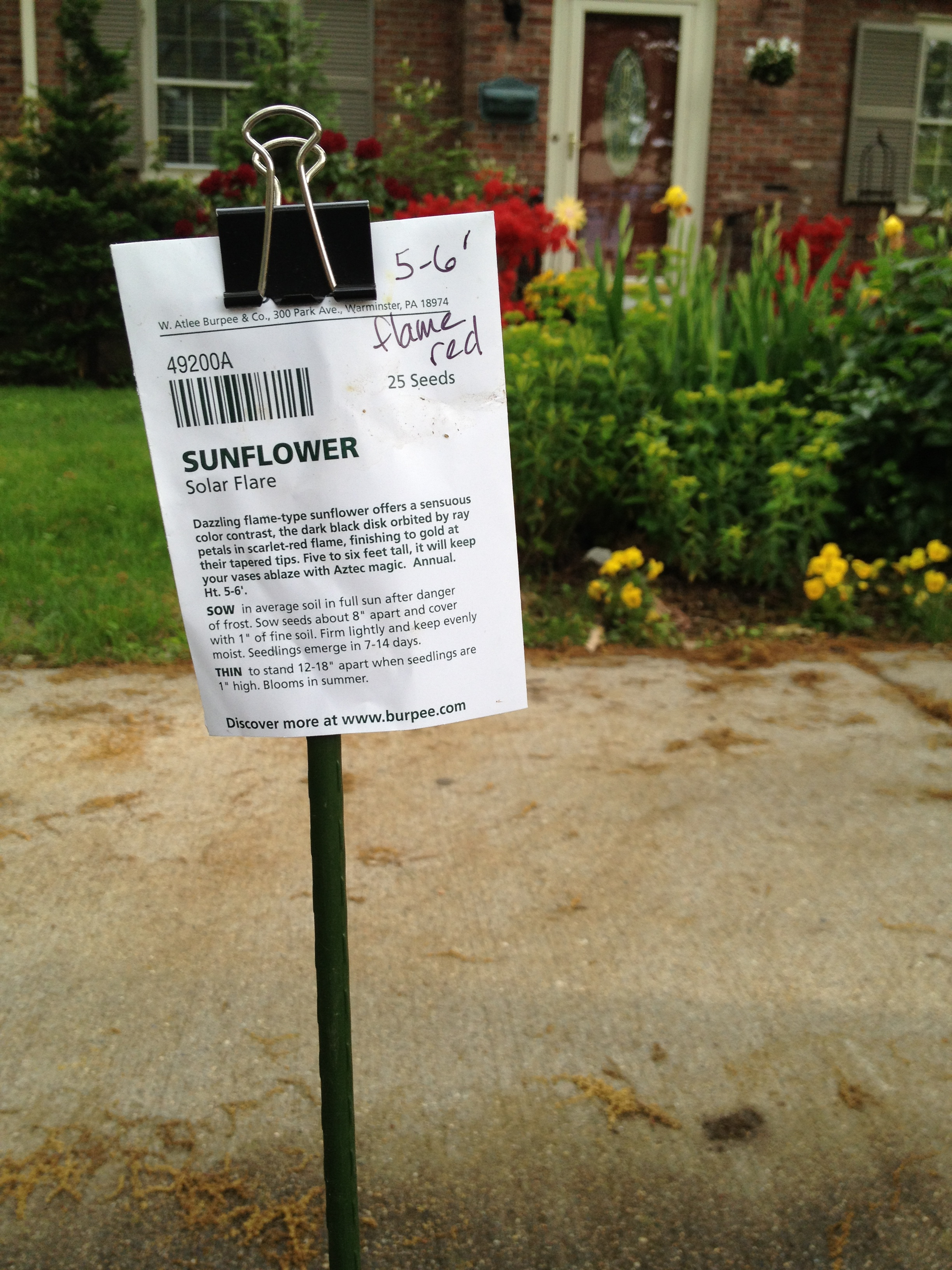
Return of the sunflower folly, with modifications

homemade seed marker

homemade seed marker

In the spring of 2009, I planted a sunflower folly in half of the front yard: link. It was a dramatic success. For me, it had been an experiment as well as a therapeutic act after I had experienced a major disappointment. In September, the growing season done, I was content with the results of my folly, documented them, and set the idea aside.

A month ago, as she watched me start the spring clean up, Lydia asked, “Can you do the sunflowers again? I loved that.” So here I go again, although on a smaller scale.

This time, instead of planting half the front lawn, we tilled up the barren strips that lie between the road and the town sidewalk. Sunflowers can grow anywhere, and the poor quality of this soil will not deter them. The flowers’ appearance will also delight passers-by and provide us with a visual screen.

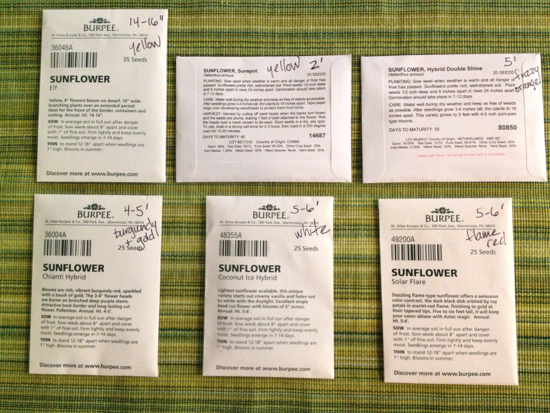
Mail-order seed packets

Mail-order seed packets

Seeds were purchased from Burpee and Gurney’s. Because the planted area would be smaller, I only ordered six packages total, in a variety of colors and heights:

  • Elf: yellow, 14″ to 16″ stems (Burpee)
  • Sunspot: yellow, 2′ stems (Gurney’s)
  • Chianti Hybrid: burgundy with gold, 4′ to 5′ stems (Burpee)
  • Hybrid Double Shine: fuzzy orange, not many seeds, 5′ stemps (Gurney’s)
  • Coconut Ice Hybrid: white, 5′ to 6′ stems (Burpee)
  • Solar Flare: flame red, 5′ to 6′ stems (Burpee)

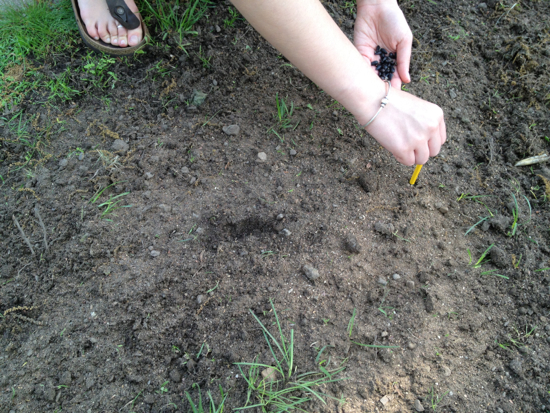
After tilling (thank you, Jimmy), Lydia raked and smoothed the dirt. I sprinkled on some foul-smelling fertilizer, and we used the eraser ends of pencils to make 1″ holes for planting the seeds.

Lydia plants her batch

Lydia plants her batch

Lydia came up with the planting scheme: tallest flowers in the sight line from our front windows, with shorter ones surrounding them. Her first proposal was that we “throw them down and let nature take its course,” but that was not enough of a scheme for me.

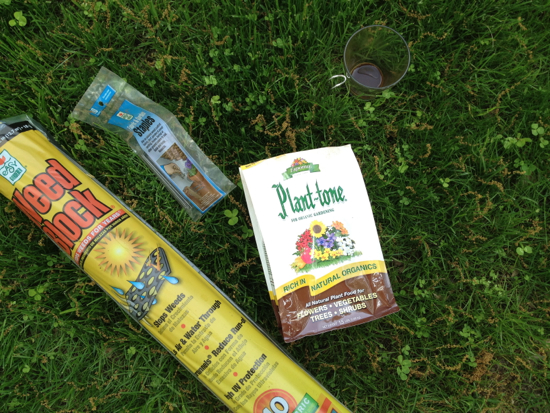
supplies: landscaper's cloth, staples, fertilizer, and espresso

supplies: landscaper’s cloth, staples, fertilizer, and espresso

This was quick work. After planting, I watered the dirt lightly, put down some landscaper’s cloth with big staples (I used black cloth this time because I could grab it at Home Depot, but wish I had the white that I mail-ordered and used for my first folly). I made some improvisatory seed markers with the seed envelopes, some gardening sticks, and binder clips. See above.

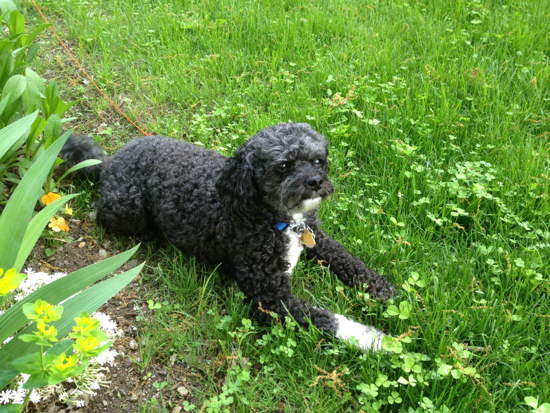
I drank espresso. Winston kept us company.

Winston, good company for gardeners

Winston, good company for gardeners

Official planting date: Monday, May 20. Stay tuned for progress reports.

—–

Previous posts on the Sunflower Folly of 2009, in chronological order:

  1. Sunflower folly: link (with full instructions)
  2. Sprouts: link (first sprouts, 13 days after planting seeds)
  3. First sunflower: link (first sunflower, 73 days after planting seeds)
  4. Habitat: link (folly as habitat for a wild rabbit)
  5. Harvest: link (sunflower harvest, four months after planting)

Blurt out, babble out the first draft (says John McPhee)

My favorite part of John McPhee’s recent essay in The New Yorker on first drafts and revision is the text of a letter he wrote to his daughter Jenny McPhee (now 51 and a novelist), when she was a senior at Princeton High School and frustrated by her inability to get things right the first time.

Dear Jenny:

The way to do a piece of writing is three or four times over, never once. For me, the hardest part comes first, getting something — anything — out in front of me. Sometimes in a nervous frenzy I just fling words as if I were flinging mud at a wall. Blurt out, heave out, babble out something — anything — as a first draft. With that, you have achieved a sort of nucleus. Then, as you work it over and alter it, you begin to shape sentences that score higher with the ear and eye. Edit it again — top to bottom. The chances are that about now you’ll be seeing something that you are sort of eager for others to see. And all that takes time.

What I have left out is the interstitial time. You finish that first awful blurting, and then you put the thing aside. You get in your car and drive home. On the way, your mind is still knitting at the words. You think of a better way to say something, a good phrase to correct a certain problem. Without the drafted version — if it did not exist — you obviously would not be thinking of things that would improve it. In short, you may be actually writing only two or three hours a day, but your mind, in one way or another, is working on it twenty-four hours a day — yes, while you sleep — but only if some sort of draft or earlier version already exists. Until it exists, writing has not really begun.

Entirely by John McPhee. A writer could go a long way on his advice and reassurance.