– Blueberries on my mind

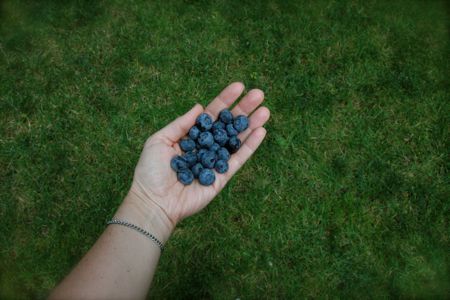
Blueberries in handWhile I do not know what form this will take, I am embarking on a biographical research project. The subject is Elizabeth Coleman White (d. 1954), an amateur botanist and serious farmer who brought the cultivated blueberry to New Jersey in the 1920s.

Why do we do the things we do? Why do we make the choices we make?

I’ve been thinking about those questions in the last month or two, after I made the commitment to myself to work on this and then started going public by testing the idea in conversations with friends as well as strangers.

No one assigned me to this subject. There is no writing contest of which I’m aware that has to do with blueberries or women farmers. I like blueberries, but I don’t grow them or even live near a patch of them.

I first got the idea to research Elizabeth White back in the summer of 2000, when I read a long article in the New York Times on New Jersey and its blueberries. In a 26-paragraph, three-recipe story, Elizabeth White appeared in a mere three sentences. Still, her story interested me enough that I saved that section of the newspaper. I dug it out several weeks ago, when I was sorting through some boxed clutter.
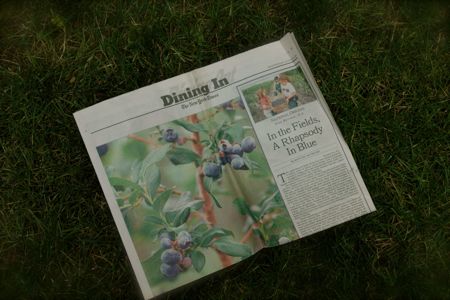
Article on blueberries

At the time, I was thinking that this might make a good subject for a children’s book, like Jacqueline Briggs Martin and Mary Azarian’s Snowflake Bentley. I even imagined a drawing of a woman, walking through fields in a white summer work dress that is stained indigo in places from squashed blueberries. In fact, I imagined that drawing so much that it started to seem like fact to me: a woman, rows and rows of blueberry bushes, hot sun, white dress, stains. Continue reading
– Explicit teaching

In the first few moments of her three-day workshop, Supporting Reading Comprehension, Writing, and Study Skills at the Landmark College Institute, Linda Hecker prompted participants (I was one of five) to introduce ourselves and say why we came.

When it was my turn, I answered that I wanted to learn and develop more explicit teaching methods, to help not only my students with learning disabilities, but all students I work with. We were invited to tell the story of a student, and I talked about A., who, when I very clearly proposed to him an alternative structure for his paper, said to me: “I understand what you mean, but I don’t know how to do what you’re saying.” I’d like to know, I said to Linda and the group, how to teach better those students who don’t intuitively know all the little steps involved in tackling a big writing task. What’s involved, for example, in summarizing a passage or chapter? I know how to summarize — but do I know how to teach the same skill?

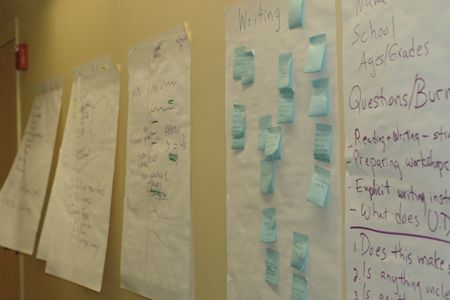
wall_postits

In the workshop, I did learn a strategy for teaching the summary, and picked up a few tools as well. Landmark emphasizes multimodal teaching, which engages a student aurally, visually, and kinesthetically in learning.  Even though their faculty have developed this kind of teaching to reach students with learning disabilities and AD/HD, this pedagogy is applicable to all learners.

Indeed, after three days at Landmark, I wanted to try out some of these exercises and tools not only on students, but on my own reading and writing practices. They’re more than effective — they seem motivating and, dare I say, fun.

What follows here is a select list of some of the ideas, remarks, readings, tools, and websites that seemed most immediately interesting to me. Certainly, there was more. It was a great experience, and, if you teach, I recommend that you go. Continue reading

– Meager light

Photosynthesis, which occurs in plants, algae, and some bacteria, uses energy from sunlight to convert carbon dioxide into organic compounds. This is food, and plants need food to grow.

If you live in Massachusetts, you may have noticed that there has been what I would call NO SUNSHINE in all of June. Well, maybe there was one day, or two afternoons. Overall, though, there has been a noticeable lack of sun.

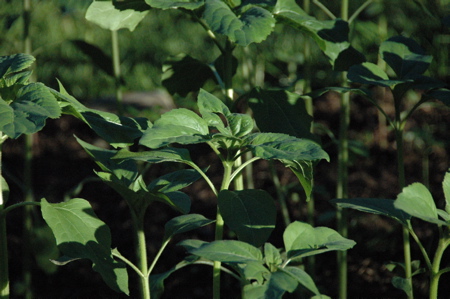
And, yet, my sunflower plants, along with the grass, hydrangea, hosta, ajuga, clematis, and all else that is green, have grown steadily. The tallest ones are up to my hip. In a rare and transient moment of June sun, Eli took their picture:

sunflower plants, 6.16.2009 at 6:25pm

sunflower plants, 6.16.2009 at 6:25pm

Their continued growth is evidence that something continues to happen even though I might say that growing conditions are limited or unfavorable: wet, dark, cold.

What meager light we’ve had seems to have been enough.

Maybe it’s worth us remembering in our own lives that, even when conditions seem limited, subtle processes continue to unfold and yield good things: ones we don’t force, ones that surprise us.

– A state for writers

Pencil Shavings 2

Lydia pulled me over to the table.

“Look at this,” she said and held up a worksheet that Grace had brought home from third grade, called “United States Regions.”

Lydia pointed to a spot on the U.S. map, on which Grace had labeled all 50 states, where she creatively spelled the name of one of them:

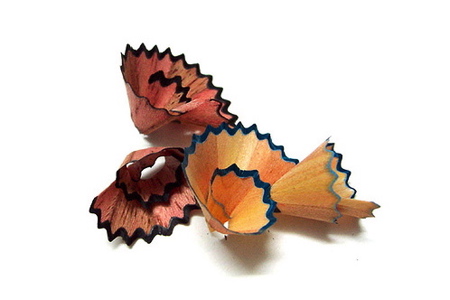
Pencilvanya

Kind of a mash of “pencil” and Uncle Vanya, no?

Which kinda reminds me… My friend James, who lives and works in that state, is blogging again.

—-

The image, “Pencil Dust,” is published by .klash on Flickr.

– What they call the first version

In Eli’s room, on top of a pile of school work, I noticed a first version of a short story he wrote for his English class.  He categorized the manuscript a “ruff jraft.” Ah, so Eli.

At dinner, I asked the others what they call the first version of things they write.

Grace: a sloppy copy

Lydia: a rough draft (“But I only call it that if I’m sure I’m going to rewrite it.”)

Jimmy: a piece of shit

There you have it.

– Uneasy nostalgia

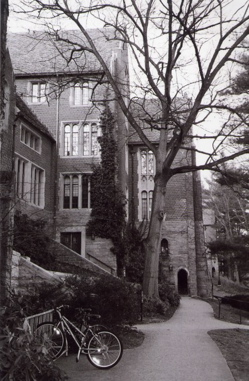
Outside Founders Hall

Outside Founders Hall

I finished writing and revising “Dead and Gone,” and I sent the essay off to editors of a journal who asked to see more of my work. One editor e-mailed me back today, confirming its receipt. All I can do now is wait.

A few readers and friends have asked about the incident central to the essay: a meeting between my Wellesley College professor and me.

That scene, which is the last bit from the essay I’ll post, is at the center of the story. It’s what I most recall about the professor and  our acquaintance, and it’s what I have turned over and over in my mind as I have considered my college years (1983 – 1987) and what the encounter has meant to me.

Curious? Continue reading

– Incomprehensible

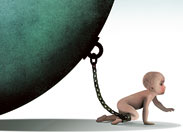
EconomistJune13CoverThe June 13th issue of The Economist is on the kitchen table, and Grace, who loves magazine covers, is examining it. I’m puttering around the kitchen. She asks, finally, “What does it mean?” So I lean over her shoulder and take a stab at explaining the visual metaphor: “Right now, the world is experiencing huge financial problems, created by people who are adults now. However, the problems are so huge that it may take 30 or so years to solve them, and the people who will be most burdened by these money problems are babies now.”

Grace responds, “I still don’t get it.”

Jimmy has entered the kitchen and offers a more concise explanation than mine: “The world is in debt right now, and the people who caused the debt are Mom and my generation and the Baby Boomers’ generation. However, the people who are going to pay for this debt are babies and children right now, like you.”

Grace looks again at the cover. “I still don’t understand.”

Honey, you shouldn’t have to, I want to say, but there is nothing more to say, because she is only nine years old.

– Watermelon hill

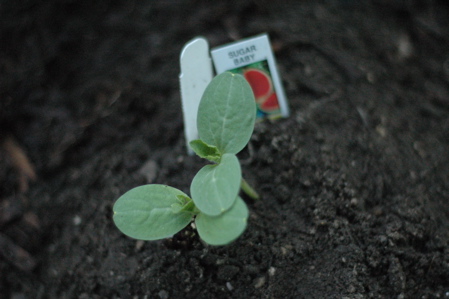
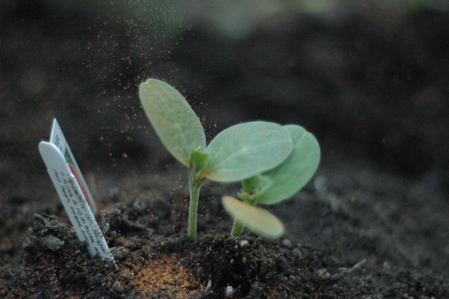
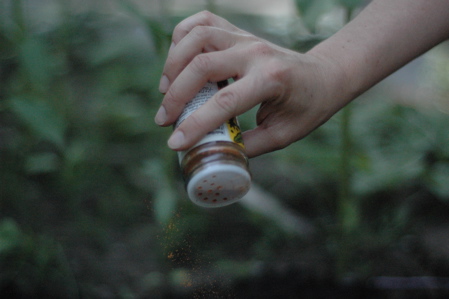
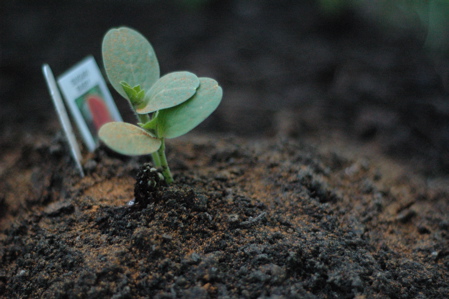
At the urging of Grace, I planted one watermelon seedling, in a little hill I made in a leftover patch among the sunflowers. It looked so attractive, a bit of green surrounded by black dirt, and it occurred suddenly to me how attractive the squirrels would find the bare dirt. So, after some thought, I sprinkled on them some cayenne pepper, which looks, in these photographs by Eli, like fairy dust.

watermelon1
watermelon2

watermelon3

watermelon4