Adrienne Rich and “The Trees”

The poet Adrienne Rich died at age 82 yesterday, March 28.  The New York Times in its obituary describes her as “among the most influential writers of the feminist movement.” This is true. Let’s also acknowledge her as one of the great writers, period, of the 20th century. Her body of work is still fresh and relevant.

The most recent issue of Granta included a new poem, “Endpapers,” which prompted me to re-read the anthology Facts of a Doorframe (new edition, 2002) and essays Arts of the Possible (2002). I first read her work deeply in a graduate class taught by Renée Bergland at Simmons College, which I attended from the age of 35 to 38. This is perhaps late to come to Adrienne Rich, seeing that she had been around as an influential writer since the 1960s, but it was the right time for me. Awakenings, after all, tend to happen once a person has some adulthood under her belt. A favorite poem from Doorframe is “The Trees.” If you know me or are a reader of this blog, this won’t surprise you. What’s surprising about the poem, however, is how unromantic it is for a nature poem: trees in a greenhouse break out as though patients from an asylum.

See below the jump for an excerpt of the poem by Rich and an excerpt of a paper comparing Rich’s “The Trees” to Frost’s “Birches” (another poem loved by me) I wrote in April 2003 for Renée’s excellent women’s poetry course. I have some new thoughts on the poem, too. Continue reading

Writing to confront the human heart in conflict

At last, another writer has excavated an issue about writing that has been worrying me. Does the desire to write and publish spring from some creative well (that is the hope) or does it spring from neurosis (that is the worry)?

In Sunday’s New York Times Magazine, Steve Almond, story writer and essayist, argues convincingly that the rise of writing workshops parallels a decline in talk therapy. He claims that what brings many individuals to writing, and to MFA programs, is less an interest in craft than a location for their “loneliness and sorrow.” About himself as a young writer, he says

I figured I had gone into the literary racket because I had urgent and profound things to say about the world and because I was a deeply creative person. But looking back, I can see that the instigating impulse for me, for all of us really, was therapeutic. We were writing to confront what Faulkner called “the human heart in conflict with itself.” And not just any heart. Our hearts.

Gulp.

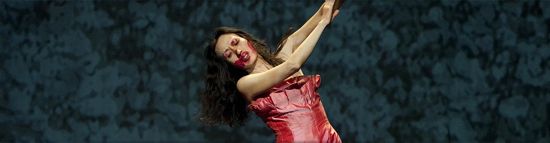
copyright: Pina (2011), by Wim Wenders

A few weeks ago, Jimmy and I went out for a quick dinner at Mantra (definitely on the down curve) before seeing Pina in 3D nearby. This you should see. Determined not to talk about the children or money, we discussed our side projects: he’s working on a novel about a discontented middle-aged man trying to reconcile himself to his life with antics both professional and personal, and I am working on a YA novel about a family of three children who have been abandoned by their parents and are trying to make it on their own, without revealing their situation to concerned adults around them. The more we described the characters and events to each other, the more concerned I became.

“Um,” I finally said, “Don’t you think this is really, really messed up?”

“What’s messed up?” Jimmy asked, perhaps having more fun with this conversation than I was.

“That maybe what we’re writing aren’t really novels, but just projections of our own subconscious conflicts and desires? Like maybe we should quit writing and straighten ourselves out?”

copyright: Pina (2011), by Wim Wenders

Jimmy responded with a writer’s answer: “In my writing, I’m trying to go to the places I fear to go.” Apparently, in his novel, the protagonist’s wife is killed, and this is upsetting to Jimmy, and so he’s writing into the terror. Armchair psychologist that I am, I speculated to myself that he also secretly and occasionally fantasizes about the disappearance of his own wife. (That’s okay, as long as I can remain alive in another dimension.)

And, hey, my subconscious is besmirched too. My protagonist may be a 13 year old girl and not a middle-aged married woman, but the mother of this girl — and the father — end up abandoning their kids in a series of events both planned and unplanned. What does that say about me? Continue reading

Banana tattoo

Eli was home from college for a week. Even when he was quiet he made his presence felt by the traces he left here and there: a skateboard in the mudroom, canvas shoes near the door, and water glasses near the couch and his bed.

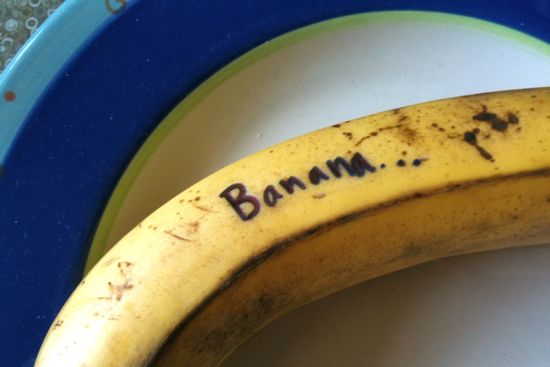
This morning I grabbed the last banana to caramelize for the waffles, and I saw that Eli may have picked up my tendency (and taken it to the next level) to see writeable surfaces in every scrap.

How do I know he wrote “Banana…” on the banana? That’s his handwriting and his sense of humor.

I am instantly in love with this project

This notice from The New Yorker caught my eye and rang the wonder bell.

Patrick Shea, an elementary-school teacher and musician who lives in Brooklyn, has spent the past three years setting “Moby-Dick” to music, writing one song per chapter. He’s performing them with his band, Call Me Ishmael, during a weekly residence at Pianos, a club on the Lower East Side.

I found Patrick Shea’s blog and song list. I found the song for possibly my favorite chapter, 89: Fast-Fish and Loose-Fish. My one-word review: peppy.

Not sure these songs will climb any charts, but no doubt Melville would have related to this display of obsessiveness.

It’s always good to leave a note

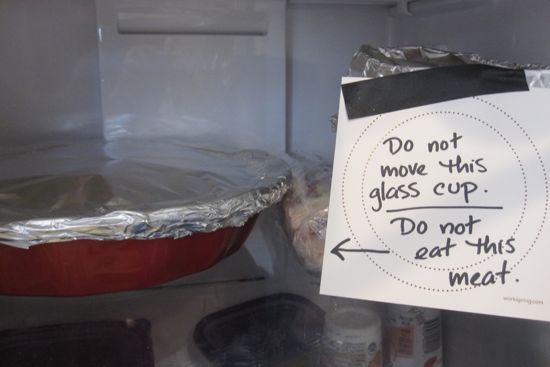
We’re having friends over for dinner tonight. Because I’m working until 5pm today, I cooked the main dish (the filling for Korean beef tacos) overnight in the crockpot. This morning I shredded the meat, strained the broth, and packed the meat and liquid into the refrigerator. Eli is home from school for a week, and I can imagine him rummaging through the fridge in my absence, finding cooked shredded beef, and sampling. And there would go dinner.

He’s still asleep. Soon I’m off for the day, so I’m left him a communiqué, taped to the Pyrex measure containing the broth to be boiled down later.

About me Lydia once said to Jimmy, “It’s so cute how mom leaves these little scrap notes everywhere.”  Any paper bag, junk mail envelope, promotional note pad, newspaper or magazine page margin, notice from school, a stray and linty post-it note, or an old greeting or business card: these are writable surfaces and a good place for me to leave a list, note to self, or note to you.