I worked at home today, and I really did. All morning the window in the kitchen, where my papers were spread out, was open, and I could hear the early grackles outside and the neighbor’s mower and little grandson. By mid-day, all of them seemed to be calling, Come out, come out, come out!
I put some money, keys, juice, phone, and, of course, my glucometer in an old backpack from my mother and sneakers on my feet, and I went. No exercise agenda, no time limit.
At the corner of Bellingham and Grove, I saw the iron cover for a town water or sewer pipe (it looks like a test tube stopper, about 8″ diameter) still popped off the pipe. It’s been like that for three weeks, and I have been thinking that one of the Bellingham people would notice and call. It seemed no one has. So I stood on the corner, searched for the Brookline DPW on my phone, and I called them. “We’ll report it,” said the lady who answered.
Past the cemetery entrance. I saw a Mercedes drive in and some town workers clustered around a dump truck. The cemetery is one of the nicest kept public spaces in our town.
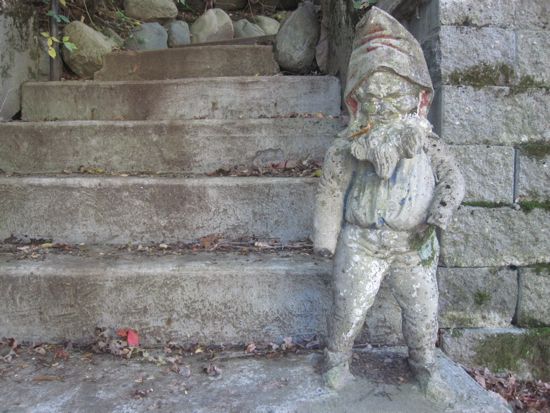
Down Allandale, with the road quiet enough that I could hear my feet on the sidewalk and birds in the trees. I looked at the site where they are building three new houses where there used to be one old pink one. Next door, there is still an old house with newer garden steps and an old weathered garden elf whose feet are caught in concrete.
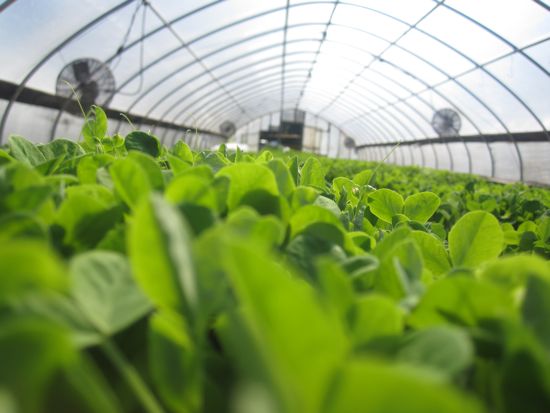
 At the farm, I went in all the greenhouses, empty of annuals. One was filled with bamboo plants and another with trays of clover.
 There were sparrows enjoying dust baths on the ground around a tractor. Some sparrows were even wriggling in the sand caught in the tractor’s big wheel treads. One sparrow wriggled in a puddle and didn’t fly away, like the others, when I walked closer.
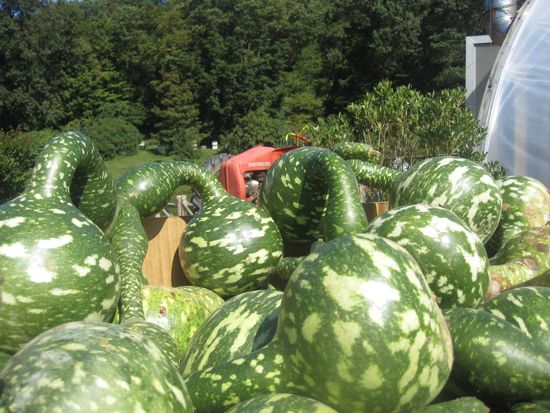
Everywhere, boxes of gourds. In the shed behind the main store, where they dole out the weekly farm shares, there was a table laden with vases filled with sunflowers. A young woman, busty and with red-gold hair dressed in a black short-sleeve tee and knee-length black shorts, danced behind the table, in the style of Natalie Merchant, and showed off, I gathered, for the guys who work with her on the farm.
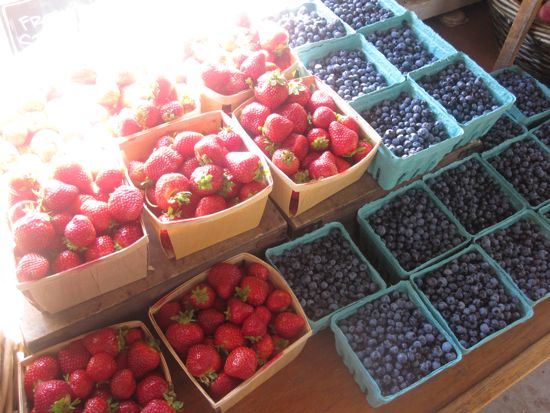
 I wanted to take her picture, but I’m not a photographer and don’t know how to intrude like that. Later, I regretted not asking her. Inside the store, there were — amazingly — fresh strawberries and blueberries for sale. From Quebec, $8 each. The picture will have to do; the price was too dear.
 Through the neighborhood and down to the West Roxbury Parkway and then the VFW Parkway. So many chipmunks, not afraid of cars whizzing by but afraid of me walking.
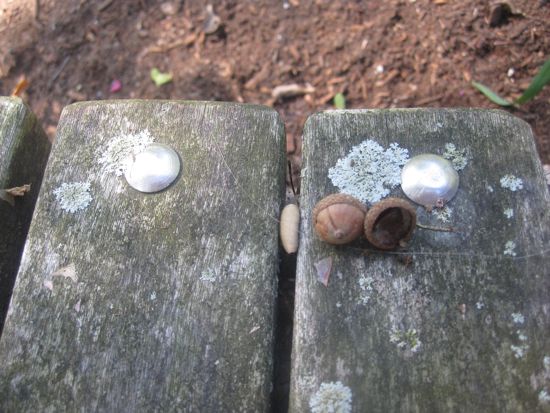
On a bench, I sat to eat the nuts I bought at Allandale and drink water. White spray-painted graffiti, one word: WRECK. On the edge of the bench, acorns, lichen, and a baby pinecone. Across the parkway, women with babies at the park, men playing basketball.
 At CVS, a birthday card for Eli. On the sidewalk outside Bertucci’s, a woman with a face lift and in a denim jacket too young for her. This thought: your hands are still old.
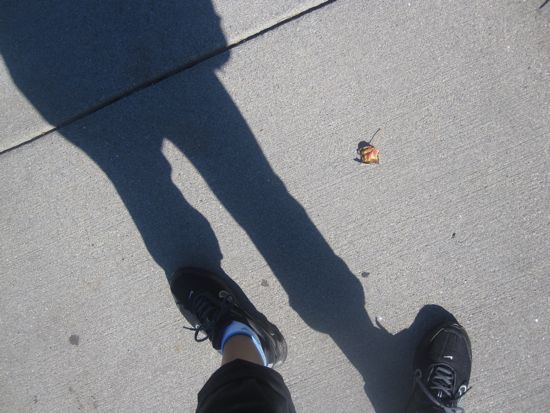
Back up Independence. A leaf on the sidewalk like tiger stripes painted on. Just one leaf. Me, like a giant. The ruler of the sidewalk world.
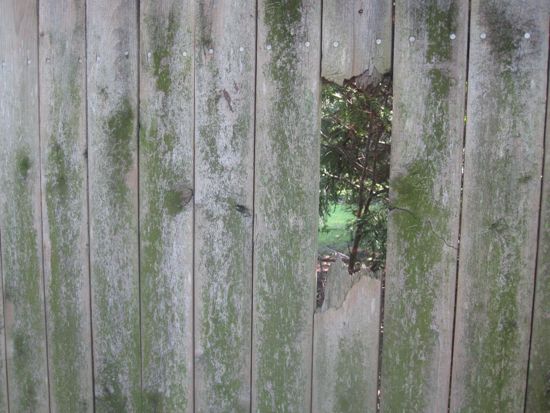
 A block later, a hole in a neighbor’s fence. Ah, a secret garden! I hoped. I looked in: only driveway and car. Disappointment.
 As I walked, it seemed to me that everything in the world may be happening when I’m at work and not noticing. That birds wriggle in sand and pumpkins warm in the sun and the dwarf keeps guard and farm girls dance and houses get built and cemeteries are maintained — this is the action.
And usually I miss it.

 leaf stitch word