– Being there

On Thursday, a new student, M., came in to the Writing Center for the first time. She had an assignment from her criminal justice class on the rule of law that she “just couldn’t start.” I sat next to her at the computer as she did the first thing: locate a definition for the rule of law. A Wikipedia article popped up; she pointed at it and said, unprompted, “Oh, I’m not gonna use that one. Anyone can write those.” So, she didn’t need too much help from me on research.

I also noticed, as our time together lengthened, that my usefulness to her was mostly in my presence, and in my occasional murmuring of vague questions like “Well… so… what do you make of that?” or nudges like “Yeah, write that down.” In front of her was a yellow ruled pad, which she kept turning to, writing note after note with a blue pen. Writing pad, pen, other vital stuffAs she wrote, she spoke some version of what she was writing: “Okay, and next I want to say that the rule of law is how it should be, and not how it actually is.” And then she would write and so on, back-and-forth between saying out loud and writing. I sat there, tilting in my chair, content to watch a young woman fill a page and hear her think out loud. Sometimes Sarah, at the front desk and the only other person in the Writing Center at the moment, would overhear and affirm M., who at one point said, “This is so much easier than it was last night, sitting alone in my room and trying to write it.”

Near the end of the hour with M., she wanted to start typing her response to her instructor’s question about rule of law, and would I look over something else she had brought in, a short essay on her educational goals? I sat nearby at the table, with her draft and my pencil. The first few paragraphs covered territory I’ve toured before: Education helps you realize your dreams; Education gets you respect. Some biographical information at the end surprised me. Her parents and friends are trying to call her back home; they don’t support her desire and determination to get an undergraduate degree, head to law school, and be a lawyer. “I have to find new friends,” her essay says, in so many words, in the conclusion. I penciled in the margin: “takes courage.”
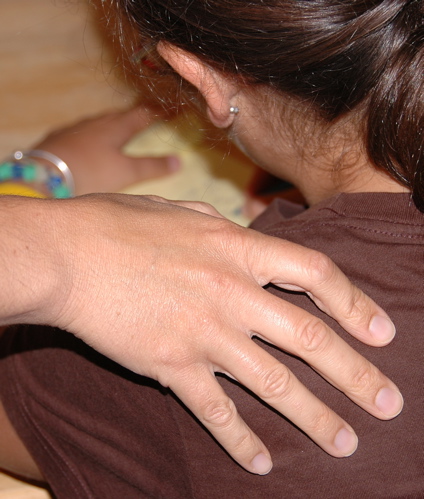
Hand on shoulderTo start out – to get going anywhere – without a companion, well, who among us wouldn’t feel the vastness of what that requires? Writing alone, always moving forward into the unfamiliar… there’s only so much of that one person can manage.

– Nell and a shovel

Nell and big shovel

This is Nell. She sent me this picture today, calling it “My Summer Job.” Until I wrote her a follow-up — “tell me more” — and got her answer, it seemed totally valid to me that Nell, as handy with power tools as she is with organizational consulting, would have a summer job operating construction equipment. Her whole family (mother, father, two brothers) is like that; they make, fix, solve, initiate, teach, and oversee. I met Nell through her mother, my friend “Jane G,” as I think of her. She and I — the two Janes — worked together, along with Nell, at The Albert Einstein Institution, an organization studying and promoting nonviolent actions run by visionary strategist Gene Sharp, in the late 1980s. Nell’s e-mail reminded me of two things I believe: (1) people who are in charge should be the people who know how to do the job, not just manage it; and (2) more people should know about Gene’s work in civilian-based defense and learn about the role of noncooperation and nonviolent strategies in diffusing or ending conflicts.

***

Note: Nell’s summer job was not in construction. Her family recently replaced the septic tank at their lake house.

– Awake at night

I read somewhere once that Freud had a name for it, Mutterschlafen, the light, alert sleep that mothers experience when their children are young and they wake often, needing comfort or milk. Grace has been getting up every night, around 2am, for a couple of weeks now. Possibly it’s allergies or back-to-school anxiety. Usually, she comes to me, and I get up and get her back in bed and sit there for a while until she sleeps again. Then I go back to my own bed and lie there, awake, for hours. Jimmy, sympathetic to my days of interrupted sleep, recently said to Grace, “When you wake in the night, come to my side of the bed, not Mom’s.” She replied, “But Mom is always awake, and you’re not.”

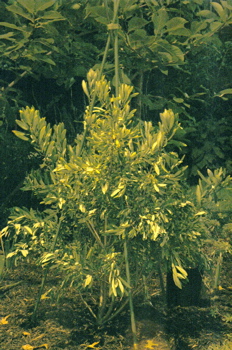
Saturday night, or Sunday morning really, this happened on schedule. I got Grace a tissue for her nose, tucked her in, and tried to go back to sleep. My mind wandered outside to the front yard, where in the day we had dug up some crowded plants, expanded the planting bed, and gave the transplants a wider berth and space to breathe and grow. One shrub we moved — a daphne — we moved against most good gardening advice. Daphne, murkyDaphne doesn’t like to be moved; she’s particular, and she doesn’t like fertilizer or much water either. And, yet, she’s lovely and smells good in the spring and has a graceful, curving upright form. You can only see that form, however, if she’s not crowded by a forsythia, baptisia, and ornamental cranberry. She was happy in her spot; I wanted to put her on the garden stage. Jimmy did the grunt work, digging around the root ball at the drip line and digging down as much. I advised him to use a spade to pry her out; when the job was on the verge of done, I looked over and saw him grab the daphne by the sturdy, narrow trunk and yank her from the dirt. Ouch. Was I mad? No… not that. The feeling was closer to forlorn. I had already decided that when you get someone to help you, you have to give them room to help in his own way, solving problems as he encountered them. Plus, the daphne branches and leaves looked vigorous, and there were plenty of orangey roots. We dug a new spot for her closer to front walk — a starring role for a beautiful specimen — and shoveled dirt back in. I investigated the hole she left behind to see what I could put in her place, and I saw something that made my heart sink: three severed roots, each the diameter of a human aorta, sticking out of the dirt, snapped, useless, separate. Hours later, in my sleeplessness, I replayed all the gardening hours in my head: Where was the mistake? The initial decision itself? My laissez-faire attitude towards oversight? My absorption in my own tasks? Awake anyway, I thought of Daphne, alone at the curb, possibly wilting. I imagined creeping downstairs, putting on my shoes that seem always to be at the front door, and going outside to, at least, monitor her, although there was no action I could take, other than waiting to see how the damage would affect her. I did not go outside. Crazy thoughts are okay; crazy behavior is not.

With the daphne on my mind, I got back to sleep, using a breathing exercise that Lydia taught me. Inhale, then count on the exhale. Breathe in, “one.” Breathe in, “two.” Breathe in, “three.” Breathe in, “four.” My heart slowed down. All day yesterday, Jimmy and I kept checking on her, looking for signs of what, we don’t know. The daphne’s leaves droop; that may be a sign of damage, or simply a sign of fall.Eli dance

***

Thank you, Eli, my night photographer. The pictures are dreams.

– From one, many

Still not ready to face the empty space in my backyard, even though there’s a small assembly of shrubs and groundcovers standing in line and waiting to be planted, I put the gloves and the old shoes on yesterday and headed out anyway. There is (now, was) a clump of irises in the front that could stand dividing.

I have more been a planter and tender than propagator, and aside from splitting up some hostas, my experience making two or more plants from one is slim indeed. I turned to the web for guidance, and I found instructions, with pictures (even better), by Todd Meier at Fine Gardening magazine.

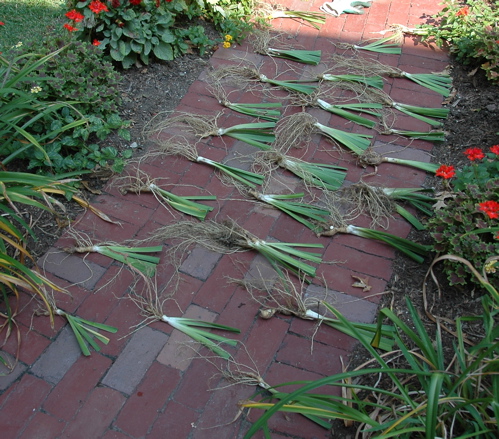
After about an hour of loosening and then prying the clump from the ground, slicing the rhizomes, untangling the hairy roots, and clipping back the greenery to a third so that each cluster of leaves had rhizomes and roots, I found myself with 26 “new” irises to plant. 26 New IrisesI counted and photographed them, then stacked them on the board I cut them on. A neighbor walked by with her dog. “What are those, onions?”

“Nope. Irises. I just dug them up and divided them.”

She has seen me work in the yard many times before; I wonder if dog walkers hold all the lore in the neighborhood. “You seem so knowledgeable.”

“Not really. I had to go on the web and find instructions how to do this, and it was pretty easy.” Besides, she’s a doctor and high up in the commonwealth’s public health department, keeping us all immunized, responding to epidemics and other threats. That seems like knowledge, to me. What I’m doing seems like the careful following of instructions.

“Oh, still,” she says. The dog leads her away. I go back to the task.

At least 15 years ago, I consulted with a counselor at Radcliffe Career Services. Before the appointment, I had filled out a bunch of questionnaires and completed the Myers-Briggs. Knife iconOne exercise was to make, simply, a list of 20 activities I enjoyed. High up on my list was “cutting things,” along with, of course, writing, drinking coffee, and knitting. The counselor was perplexed: “What are we supposed to do with this, ‘cutting things’?” I replied that I didn’t know; it was her exercise, not mine. She had a good nature and laughed. And, even though I have failed, since then, to find a job involving all of the top 10 items on that list, it remains true that any activity involving a knife or sharp scissors is a good one, according to me.

– Blank page fear

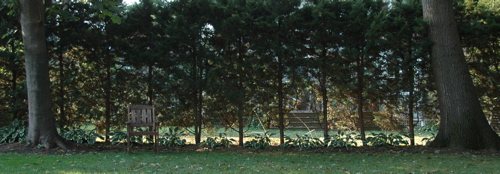
This is the view from my kitchen window. Besides the neighbor’s row of junipers and our drooping hostas, this is the least planted spot in the yard. In the eight years we’ve lived here, since we took down a rotted white picket fence along the back and dug out clots of brush, I’ve stood at the sink and looked and looked and looked at this empty space. Blank space with chairI can’t say that I’ve spent much time imagining what I would plant there; it’s been mostly a focal point for daydreaming about other things. Once in a while, I’ve moved the chair or a bench into view, just to alter the scene a bit. Suddenly, recently, I tired of an empty that’s too empty, and I decided to plant.

Days later, in front of the outdoor cashier booth at the Dennis Agway, with shrubs and ground covers in a wagon behind me and Jimmy having gone to get the car, I said to the woman behind the counter and to Bob who advised me on the plants, “I’m hesitating. I… I have this blank space in my yard and I think I’m afraid to plant it.”

She nods. “Oh, yeah.”

Bob, who I’ve discovered is a retired social studies teacher and now full-time gardener, says, “We all feel it.”

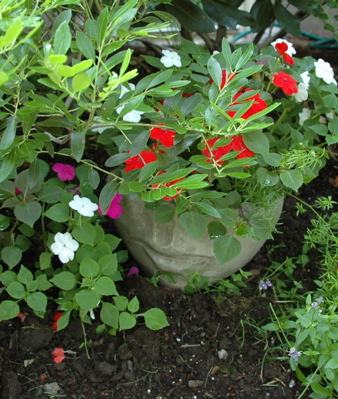
“You just have to put something in the ground.”Half Face 2

“Dig it in.”

“Yeah. Hey? See what happens.”

We all seem resigned to this, and nod at each other. I sign my credit card receipt; Bob wheels the plants out to the car; and I’m on my way.

– Back to school

At an orientation for students involved in a bridge-to-college program, in which we offer enhanced, personal support to students who, in high school, were academically shaky, we asked them to put their heads together and come up with a list of characteristics delineating the “ideal instructor.”

What Makes a Good Teacher (according to students)

  • likes questions
  • loves what she or he is teaching
  • hardworking
  • dedicated to helping students achieve
  • active
  • could be fun in class
  • engaged in class
  • is like a friend
  • outgoing
  • is into it

Those items are all exact quotes. My favorite, and the most simply profound, is the last one. Personally, I don’t have a dog-and-pony show and, as anyone who knows me can tell you, I can’t tell jokes. I hope I’m a friend to my students, but I’m not a buddy. What I can do is show my students I’m “into it” — whether I’m in class or a tutorial — by engaging in what I want them to engage in. When they read in class, I read. When they puzzle, I puzzle with. When they write, I write. And I’m into it. Interested in an example? Continue reading

– Eat the green

Backyard farmers have been harvesting ripe, yielding-to-the-touch tomatoes for a few weeks now. There are still plenty of greenish ones on the vine or a kitchen windowsill, hanging out there, awaiting more sun and their own readiness. Some will ripen; some will not.

The gardener, and the eater too, seek the ideal — a ripe, tart and sweet, dripping tomato that matches the memory of a tomato enjoyed, sliced and salted on a plate, in the shady backyard of youth. Waiting for it, they miss today’s chance to eat something very delicious indeed.

Last year, after school started and summer segued into fall, my neighbor Susan gave up on the last of her tomato plants and handed a cache of the stubborn green ones to me. In August, I had eaten a tastebud-altering fried green tomato BLT at a cafe in Oak Bluffs, Martha’s Vineyard. Wanting to replicate the meal, I leafed through cookbooks in the house. In the index of Mark Bittman’s How to Cook Everything, under “Tomato(es),” I discovered two for “green”: pan-fried, and salsa.

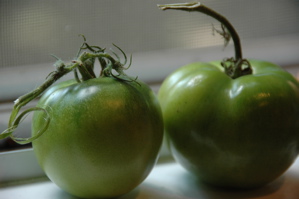
Green tomatoesAbout the green tomato salsa, Jimmy said, “This is one of the ten best things I have eaten in my life.” The kids and my friend Julie and I sat around the kitchen table in the afternoon with tortilla chips and, when they were gone, spoons, and ate it all. Last week, after fruitlessly searching for unripe tomatoes at the Newton Farmers’ Market, my friend Pam gave me the only one she had. Later, I called Susan, who was such a reliable supplier last summer, and cadged another one. From that tiny yield, I fried enough for two BLTs, and a little extra taste for the cook.

Resist perfectionism: Stop thinking of those green tomatoes on overgrown, leggy vines as works in progress. Pick them; prepare and eat them. Recipes are here. The experience might make you wonder, as Jimmy did as we cleaned up the sandwich mess, “What does ‘done’ mean?”

[Photo credit: Eli Guterman.]

– Feed your head

This curious writing exercise, from Pat Schneider’s Writing Alone and with Others, is unlike any I’ve done before. To begin, I had to put aside my internal language and “blank out,” in a way.

Imagine yourself looking down into a deep well. You are safe, comfortable, looking over the edge and down. You can see the surface of the water far, far down. As you watch the water, allow images to rise to the surface and float there, then recede again below the surface as other images rise. Do this as long as you want, then write whatever comes to you. (70)

I don’t want to say more and risk infiltrating your ruminations with mine. Just try it.

– Dead letter dress

After reading my friend Lauren’s lovely short essay, “Paper Trails,” about the archives left in her care by three deceased relatives, I thought about my own files of cards and letters from people, once dear, who are now dead to me, whether or not they are still living: Aunt Elsie; Ellen, my maternal grandmother; Nicole, a high school friend. I hold one side of what were once active correspondences; absent is the other side, that is, letters from me.

My letters might have ended up in the trash or in a never-opened file cabinet. They’re as gone to me as the person is. Concrete evidence of who I was and what I cared about in, say, 1985, when I still wrote devotedly to the Davenports, a Yorkshire family I stayed with for a month in 1983, belongs to the recipients.

Those long, newsy air letters could, also, have ended up in a daughter’s or son’s hands, as did the checks, diaries, and documents of Lauren’s parents and her old aunt. They could also have ended up in the hands of a stranger, who came across them at an estate sale and who knows neither me nor the Davenports nor any other person I wrote to.

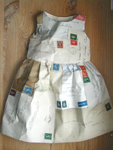
Letter DressIf the stranger were an artist, she might have sewn them into a dress, as Jennifer Collier does with maps, pattern paper, book pages, and old letters and envelopes. In describing Collier’s constructions (which are not made to be worn), Craft magazine’s print version calls them “a great reminder of the way clothes get loaded down with meaning.” I look at this stitched paper dress, wonder about the origin of the letters, and think of the persons — strangers to me, intimates to the letters’ recipients — they stand in for.

– What it takes to unmake

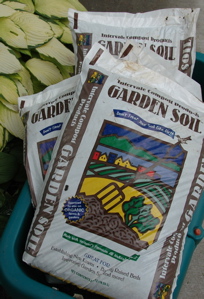
On Sunday, I bought dirt, four heavy bags of it. Dirt(Why are dirt and mulch packed wet inside their bags, turning 10 pounds of organic matter into 40 pounds? Seeing that there is no “life” to dirt or mulch — in fact, that it is dead and decomposing matter is kind of the point — the moisture seems a frill, a cosmetic enhancement of sorts.) Wanting to be my own woman, and not appear to be flirting with the outdoorsy, interestingly-tattoed guy at Allandale, I rejected his offer of help with the dirt. As soon as I got the first sack of it perched on my shoulder to carry it across the gravel parking lot to my car, I regretted my unproductive pride. It hurts to be my age and carry that much dirt. Four times. When I reached home, I tiptoed into Bob & Mary’s fenced yard and borrowed a child’s play wagon to cart it from the driveway around to the back.

Last week I offered Eli and his pal Arthur $50 each, plus lunch from Domino’s, to take down our old, metal swingset. Shortly after we bought and installed it, in 1999, the company went out of business. So, over the years, as parts broke, we just removed them, leaving an empty space where, e.g., the gondola once was. In June, one of the young guys who cuts our lawn was chasing his coworker around on a power mower and crashed into the swingset, permanently crimping one of the support legs. Although I pleasantly brought this infraction to the attention of the landscape company owner, it felt pushy to demand redress, seeing that Jimmy and I had known for a while anyway that the swingset was on its last leg and that we would have to dismantle it soon.

While adults are gearing up for fall and back-to-school tasks, children are at loose ends: Camp has ended, family vacation has been endured, and hanging around has lost its June flavor. This, to me, is a perfect time for chores, and only recently did it occur to me that my children are old enough to tackle big ones, Eli puts his back into it.the kinds you might think of hiring someone for: painting, digging, purging, and heavy lifting.

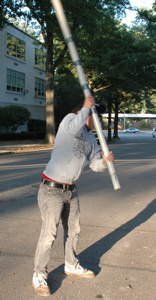
It took two fourteen-year-old boys — the Demolition Department — two days to take down the swingset. On day one they dug the legs out of the ground and disconnected them from the anchors, and on day two they unbolted all the pieces. They worked unsupervised, figuring out the tools and the problems as they went. A hammer and a couple of wrenches were all they needed until the end, when rusted-together sections of the main horizontal crossbar resisted their muscle power. I brought out a hacksaw, and then a power saw. Thirty minutes of application yielded only some shallow grooves in the metal. They put their heads together, ignored common sense, and took turns standing the 12 foot pipe on its end and then letting it go so that it would crash against an old maple. This loosened the rust, but not enough. When last I looked, Eli and Arthur were standing in the road, with the pipe on its end, getting read to let it go onto the pavement. “Boys,” I thought, and left them to their own devices. It worked.

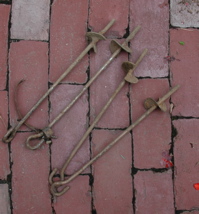
Four anchorsMy bargain with them did not require them to dig up the swing anchors and patch the holes. That task fell to me, but it’s the kind of thing I like to do anyway. The first of the four anchors was a struggle, because I was still working out my removal method: digging around it, cutting tree roots, prying out stones, and shimmying it while unscrewing. Only in extracting all four from the ground did I become confident in how safe they make a swingset. There really was no way the back-and-forth of a swinger would ever have gathered enough force to jerk them out of the ground. And now they’re out, unmoored and, like old teeth, their usefulness used up, so we’ll throw them out.

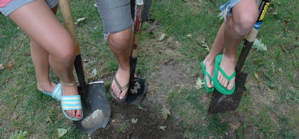
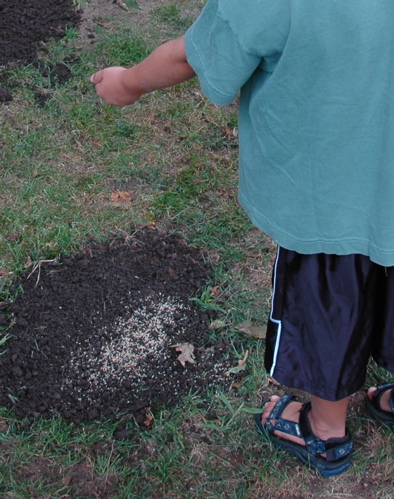
The Girl Squad — Lydia, Mary, and Carolina — were talked into spading up the dirt in the packed down ruts as I harvested all the loose stones and put them into a little rain ditch I’m making under a downspout. Girl SquadThey went on to bigger and better things (surfing videos on Youtube) while I emptied and spread the dirt. Another helper, five-year-old George, joined me just when it was time to spread some grass seed, and I showed him how to sprinkle the seed and then spray with water. I asked George how long he thinks it’ll take before the grass seed sprouts; he paused, and answered seriously, “About seven days.”

Helper and circleRight now there are seven neat, dark circles of dirt and a newly open space in the backyard. Many hours of effort of seven human beings went into undoing a structure that took two men (Jimmy and my father) a whole day to construct. There were costs as well: $120 labor ($50 x 2 teenagers + 20% tip); $21.85 (Domino’s pizza order + $3 tip); and $25.96 ($6.69 x 4 bags dirt). Total: $167.81.

And these are how our late summer days go.