– Garden for our times

Do you remember the walled, overgrown garden brought back to life by a boy and a girl in F. H. Burnett’s Secret Garden (1911)? The book was a favorite of my childhood, and perhaps the long, restorative story about gardening has something to do with my own attraction to shabby, abandoned patches, as if glory and possibility, like this, await in each one:

The seeds Dickon and Mary had planted grew as if fairies had tended them. Satiny poppies of all tints danced in the breeze by the score, gaily defying flowers which had lived in the garden for years and which it might be confessed seemed rather to wonder how such new people had got there. And the roses–the roses! Rising out of the grass, tangled round the sun-dial, wreathing the tree trunks and hanging from their branches, climbing up the walls and spreading over them with long garlands falling in cascades–they came alive day by day, hour by hour. Fair fresh leaves, and buds–and buds–tiny at first but swelling and working Magic until they burst and uncurled into cups of scent delicately spilling themselves over their brims and filling the garden air. (247)

Lovely, isn’t it? Fresh, new, full of playful life — not unlike an uncomplicated view of the child.

And here’s the garden for our times. It is tended by the 21-year-old Edmond who has been traumatized by witnessing the slaughter of a contemporary war started in England by “The Enemy,” and it appears at the end of Meg Rosoff’s How I live now (2004):

On the warm stone walls, climbing roses were just coming into bloom and great twisted branches of honeysuckle and clematis wrestled each other as they tumbled up and over the top of the wall. Against another wall were white apple blossoms on branches cut into sharp crucifixes and forced to lie flat against the stone. Below, the huge frilled lips of giant tulips in shades of white and cream nodded in their beds. They were almost finished now, spread open too far, splayed, exposing obscene black centers…

The air was suffocating, charged, the hungry plants sucking at the earth with their ferocious appetites. You could almost watch them grow, pressing fat green tongues up through the black earth. (181)

The passage is narrated by Daisy, Edmond’s American first cousin and former lover, also 21, who returns to him after a six-year absence because of the war, which spread beyond the British island to six continents. Like the Secret Garden, this novel, which Meg Rosoff reportedly began writing in the run-up to the war in Iraq, is aimed at a young audience. Rosoff doesn’t shy away from blood, terror, or torture: a man has his face blown off, some civilians are slaughtered and most are displaced from their homes, and children roam the woods and abandoned farms, hiding and fending for themselves. Parent figures are either absent or die off quickly.

How I live now, coverThere’s nothing pastoral about the England in How I live now. Yet this dystopic novel is not without hope. In the end, Daisy joins Edmond in tending his rage-filled garden, and the reader senses that somehow subverting anger into hungry, persistent life offers a way back to what has been in short supply: peace.

– Little house moment

Rain on stepsSaturday: rain, finally.

There was one quiet period when Lydia was at Mandarin Gourmet, having lunch with her friends; Eli was at John’s house, doing some mysterious thing that teenage boys do, fueled by Vitamin Water and cheddar cheese potato chips; and Jimmy was at Roche Brothers, getting provisions.

Grace and I were home, quietly puttering around. I sorted the junk mail on the dining room table while she worked at a rainy-day gardening task I gave her: creating plant markers for all the “new” perennials I made over the summer by dividing the overgrown ones. They’re about to fade into the ground for the winter, and I want to mark their places while they’re still recognizable. Look at this — 45 plants from the original seven.

Plants markers by Grace

Finished with lettering, Grace wanted another chore. “Do you want to organize the spice jars?” I asked. We have too many, including lots of half-containers of duplicates and triplicates (four little shakers of thyme leaves!). I put them all on the counter for her, and then she arranged them according to her own scheme, which had something to do with size. Any scheme is better than no scheme.

Spice collection undergoes renovation

I left her arrangement out for a while, admiring it and inviting the comers-home to admire it, too. Hours later, after Grace was asleep, I filed them away into the cabinet.

During the industrious and peaceful hour or two, I suddenly thought of Laura Ingalls Wilder’s Little House books, and how much I loved them as a child, and how the drama of the family’s survival is punctuated Little House coverby these moments of unadorned pleasure of a kind we don’t usually get to experience in our lives, in a time when the birch plant markers have to be ordered online and delivered by UPS, and when we can walk across one intersection and get Starbucks coffee or egg drop soup any time we want. I like that, and I even wish sometimes that there were still more restaurants within walking distance of my house, but I also like when, as I felt on Saturday, what you have to do is not be anywhere else but where you are.

—-

Read the first several paragraphs of Little House in the Big Woods here.  Ah, trees.

– For your eyes only

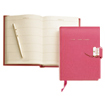
Pink locking diaryBound diaries and journals have not always been secured by a padlock or hidden between the boxspring and mattress. Thoreau and his Transcendentalist friends, in fact, often wrote them with the knowledge that they would be read, whether in their lifetimes or posthumously.

According to an article in the local Brookline TAB this week (11.1.07), which announces the publication of a new compilation of Thoreau’s journal entries called I to Myself (YUP 2007),

Keeping a journal to share with friends was a far more common activity for people of all educational levels in Thoreau’s era than today. “Back then almost everyone kept a journal, even farmers and definitely educated people,” says [Jeffrey S.] Cramer. People shared their journals. When Thoreau writes in his journal, you feel like he’s talking to you. In his journals he’s definitely writing to a reader.”

Verification for this remark appears in the chapter “Thoreau in His Journal” in the Cambridge Companion to Henry David Thoreau (CUP 1995). Yes, the Transcendentalists were devoted journal keepers who wrote, often, for each other. So were other Concord residents — clergy, teachers, naturalists, businessmen, lawyers, housewives, unmarried women, students, farmers (109) — writing in and keeping journals. About his own massive journals, which were circulated so often they became a kind of “lending library,” Bronson Alcott, the father of Louisa May, wrote that the collection:

…gathers up the fragments, and preserves in transcript, whatever there may be for future value & use, so that nothing of life shall be wantonly contemned or irretrievably lost…. The history of one human mind… would be a treasure of inconceivably more value to the world than all the systems which philosophers have built concerning the mind up to this day. (111)

I ask you, fellow bloggers, are we not participating in a grand tradition? Like our 18th and 19th century forebears, today’s electronic journals are also built on timeless topics — among more contemporary ones like restaurants, sex, movies, and baseball — such as these mentioned in the Cambridge Companion:

• domestic operations;
• reading records;
• travel narratives;
• business;
• notes on changes of seasons or weather;
• medical observations;
• flora and fauna;
• introspective registers;
• private histories;
• political or other social and institutional goings-on; and
• of course, combinations of several, perhaps many, of these. (108-109)

And none under lock and key.

—-

Image of pink diary from Smythson of Bond Street catalog.

– Sitting still

This drought is hard on living things with shallow root systems. For weeks I’ve been moving the sprinkler around the yard, trying to hit each spot every few days. Around 8 o’clock the other night, I was standing in my driveway, watching the oscillating streams that were illuminated by the street light. On the other side of Puddingstone Road, Steff emerged with her children from the lit foyer, saw me in the mostly dark, and asked in a friendly way if I was watching my grass grow. “Yes… yes, I am.” A simple answer, yet not quite right.

Plant & brick detail, wet

Often in the summer I sit on the front steps, looking at the current state of affairs in the yard: subtle undulation of brick, mix of blooms and leaves, shadow and light on the lawn. Sometimes I look across to the temple, and I check out the greenness of the grass or the alertness of the annuals or the bend in the trunk of the tall white birch, which Dick tends while Rufus, his bulldog, keeps him company. In an hour, creatures might shift a bit, puddles may appear, but nothing much changes — nothing more than this, anyway:

A haiku by Shiki (Japanese. 1867-1902):

The sparrow hops
Along the verandah,
With wet feet.

Our front door, unless we’re asleep, is always open to the storm door, so we can look out. This morning, Grace perched herself on the front steps: Grace, sitting still for a changenot feeling well, sitting quietly. That’s my summer spot. Today I sat inside, on the stairs that go up, and looked out at her looking out. I thought of how a moment freezes when we watch our children, still, like this. Eli told me once that he’s noticed me stand in a doorway and watch the girls, who go to bed earlier than he does, as they lie there. “You like to watch us sleep, right, Mom?” All parents do: It’s the only time, kids, that you stop moving, and that Time stops, going neither forward into your future or looking back over its shoulder at your earlier selves. It stops. I study you, in the absolute present. This is not time expanding, as it does when a person becomes absorbed in the activity of writing or gardening or making music or love. That kind of flow has movement in it, even if the movement makes the experiencer lose consciousness of self and time. What I’m talking about here is Time… pausing. Time bare of verbs.

One by Issa (Japanese. 1763-1827):

How lovely,
Through the torn paper window
The Milky Way.

I was not, then, watching the grass grow two nights ago. More like me, grass, water, dark, warm air, streetlights, and still.

Grace and Jane on front steps—–

Photographs of Grace alone and Grace & Jane by Eli.
Haiku from
Haiku (Everyman’s Library, 2003).

– Summer fades

For season-watchers, thoughtful gardeners, and poetry readers, here is an excerpt from Louise Glück’s poem “October,” from her collection Averno (FSG 2006).

4.

The light has changed;
middle C is tuned darker now.
And the songs of morning sound over-rehearsed.

This is the light of autumn, not the light of spring.
The light of autumn: you will not be spared.

The songs have changed; the unspeakable
has entered them.

This is the light of autumn, not the light that says
I am reborn.

Glück’s precision and steady hand remind me that there may be allure in what is plain. Even if it unsettles you. Especially if.

– Potatoes, and other prompts

I like the concreteness of things. Focusing on them while writing also frees me from my vague and persistent thoughts. Put an old key, a knife, an unfamiliar picture, or brooch in front of me, and I feel interest in at least describing the item. That inevitably leads to a connection with my own experience and, sometimes, a new question.

In her handbook, Writing Alone and with Others, which is filled with attractive writing New potatoesexercises, Pat Schneider offers many examples of using objects as “triggers” in her workshops for writers. Sometimes, she places a covered basket of 30 or 40 items on a table, removes the cover, and asks group members to take one or two objects, hold them, and freewrite for 10 minutes or so. Other times, she has multiples of the same item, and hands one to each member, getting them to all start writing from a similar place, as a way of seeing how individual writers will all mull differently over a shell, for example. Some items she suggests, like cinnamon sticks, even have scent.

  • Here are Schneider’s suggestions for a diverse basketful: shaving brush, rusty horseshoe, a ball and jacks, baseball, crocheted doily, piece of frayed rope, bottle of pills (with label scratched so pills become unidentifiable), rosary beads, crumpled cigarette pack, page of scripture written in Hebrew, small teddy bear, broken dish, mirrored compact, man’s pipe, baby bottle, old piece of jewelry, spool of thread with a needle stuck in it, dog whistle, artificial flower, plastic Jesus figuerine, and empty whisky bottle.
  • Suggestions for multiples of same object: mothball (in plastic snack bags to protect hands), piece of penny candy, a nail or screw, a vitamin pill, acorn, torn piece of a map, slice of raw carrot, rock, a small piece of sandpaper along with a bit of cotton, or a long stem of wheat or grass.

Collect some acorns. Buy a bag of wooden clothespins or new potatoes. Make your own object-filled basket. Offer surprise to your students. Or, assemble a collection, put it aside for a few weeks, and then take it out again to prompt your own writing. Surprise yourself.

—–

Picture credit goes to BBC Food.

– Sign in stone

Do you know how an image, from a book or movie or even your own dreams, can enter and then stick in your mind? For days, since reading this passage in If on a winter’s night a traveler by Italo Calvino, I’ve been seeing this hand in stone — my version of it — everywhere:

Monday. Today I saw a hand thrust out of a window of the prison, toward the sea. I was walking on the seawall of the port, as is my habit, until I was just below the old fortress. The fortress is entirely enclosed by its oblique walls; the windows, protected by double or triple grilles, seem blind. Even knowing that prisoners are confined in there, I have always looked on the fortress as an element of inert nature, of the mineral kingdom. Therefore the appearance of the hand amazed me, as if it had emerged from the cliff. The hand was in an unnatural position; I suppose the windows are set high in the cells and cut out of the wall; the prisoner must have performed an acrobat’s feat – or, rather, a contortionist’s – to get his arm through grille after grille, to wave his hand in the free air. It was not a prisoner’s signal to me, or to anyone else; at any rate I did not take it as such; indeed, then and there I did not think of the prisoners at all; I must say that the hand seemed white and slender to me, a hand not unlike my own, in which nothing suggested the roughness one would expect in a convict. For me it was like a sign coming from the stone: the stone wanted to inform me that our substance was common, and therefore something of what constitutes my person would remain, would not be lost with the end of the world; a communication will still be possible in the desert bereft of life, bereft of my life and all memory of me. I am telling the first impressions I noted, which are the ones that count.

It’s not just the image. I love the simple surprises in “mineral kingdom,” “free air,” and “white and slender,” the slant repetition of “desert bereft of life, bereft of my life,” and the narrator’s measured acceptance of the remarkable “thrust out” hand he has seen and what it means to him.

– Feed your head

This curious writing exercise, from Pat Schneider’s Writing Alone and with Others, is unlike any I’ve done before. To begin, I had to put aside my internal language and “blank out,” in a way.

Imagine yourself looking down into a deep well. You are safe, comfortable, looking over the edge and down. You can see the surface of the water far, far down. As you watch the water, allow images to rise to the surface and float there, then recede again below the surface as other images rise. Do this as long as you want, then write whatever comes to you. (70)

I don’t want to say more and risk infiltrating your ruminations with mine. Just try it.

– Passalongs: from their houses, to mine

No one is required to give credit to the source of the plants in a yard, although those sources are likely numerous: previous owner of the home, local nursery, hardware chain’s garden department, botanical society’s annual sale, mail order catalog, and other gardens.

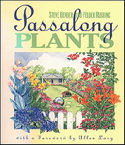
The offspring of plants from other gardens are called “passalongs.” In the purest sense, passalong describes plants that are difficult to find and purchase through the usual sources and therefore must be propagated from a piece of an existing plant in an established garden. Passalong Cover(See Bender & Rushing’s Passalong Plants for lively essays on these heirlooms.) Some gardeners use the term, simply, to describe plants divided and shared among friends and neighbors.

In my yard, I have thriving raspberry canes, clematis vines, hydrangea bush, and ajuga spreads that started from cuttings originated in other gardens. All of these plants are standards I could find at a nursery, but they’re dearer to me because as I tend them I feel, in a way, as if I’m tending my connection to their givers.

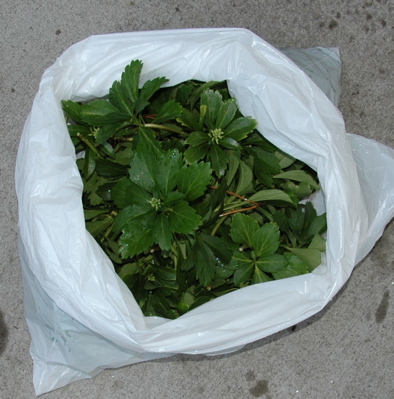
Last weekend, at my parents’ house, I deliberately harvested my own passalongs from their yard, 100 cuttings from a swath of pachysandra alongside their garage. Years ago I read, although I don’t recall where, that you can slice off the top few inches of a pachysandra stem, throw a whole bunch in a plastic bag, Pachy Greenhouseadd a cup of water, seal the bag, and then wait several days for the severed stems to root in this makeshift greenhouse. This project is motivated by a wish to transplant some growing thing from my parents’ yard to mine and also by a very blank space in an alley between my house and Bob & Mary’s fence.

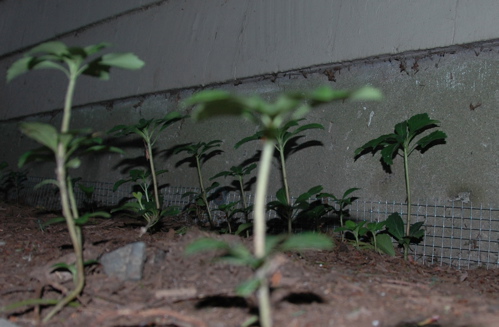
The blank space, in fact, was once filled by my own lush pachysandra patch, bought in an immense quantity in flats from Home Depot, and then planted one compact dirt-and-root cube at a time in soil enriched with dried manure and then mulched over. They lived quite nicely in their shady, neglected conditions, and probably would have ad infinitum if not for the “rodent intervention,” i.e., rat barrier, recommended and then installed by an “urban wildlife expert,” i.e., exterminator. In one afternoon, he and his partner, with a friendly Golden Lab keeping them company, dug up the pachys to get at the foundation, to which they tacked a long, foot-wide roll of wire mesh. Only a few stems Pachy Trees struggled back from leftover bits the following spring.

Will this experiment work? Will the cuttings root in their garbage bag greenhouse? Will this decimated pachysandra patch rise up and fill in? In a few weeks, I’ll know.