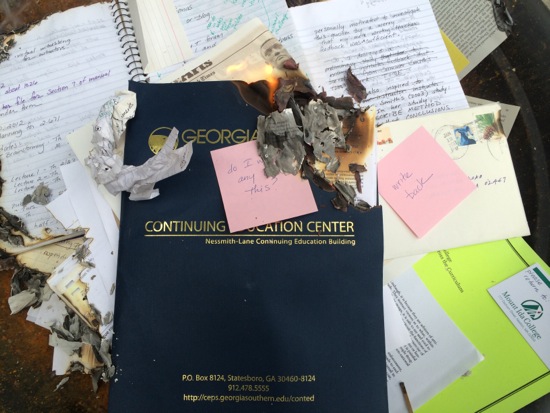
 A week after I posted my short account of burning some papers and notebooks from the Jane Kokernak Archives, one of my writing-and-teaching colleagues at MIT, Susan Spilecki, sent me a poem she wrote that is a response to it. The existence of her poem is, by itself, extremely flattering. More importantly, the words, images, and sober conclusion gave me new insight into what will probably be a source of conflict and even some sadness for the rest of my life. On the same topic, another friend, Bob Price, emailed me and told me of a box of stuff accumulated since boyhood. He hoped I’d kept at least some of my stuff, though added: “I must agree with you that the dead weight of the past needs to be savagely pruned from time to time, lest it crush us.”
Here is Susan Spilecki’s poem. You can read more of her thoughts on the writing and teaching of poetry at her blog, Building a Poem, here: link.
Plans and Fires, Well-Laid
for Jane Kokernak
Every thinker has this bonfire coming:
projects abandoned, dreams deferred, lists
left to speak their goals to unlistening ears:
alternate futures we did not live
into, perhaps because the fire refused
to light. Every page looks flammable, but
that promise often goes unfulfilled. As much
as we live toward multiple futures, our bodies
only move in the present, our hearts’ fire
only ignites in the presence of the muse’s rare
phlogiston, an ether hotter than the white coals
of the blacksmith’s fire. Thus, the brave ones
gather these scraps and plans, carry them
(as we have been carrying them for years) out
into the winter field. But just as they
would not blaze for us in those busy years,
no match can turn these scattered feathers
into wings of flame. No gas can turn wood pulp
and ink into light and heat. Charred edges
holes seared here and there. That’s all.
But water, too, destroys. Though it appears soft
and harmless, pretty even, the rage of water
engulfing these past predictions, sinking in
to their false promises, turns their To-Do Lies
into a mush with the aroma of ashes. Though
we anticipated a tiny inferno, we should have
known it would end, instead, like this: a mere bog
of unfinished beginnings and unlightable fires.
Susan Spilecki
—–
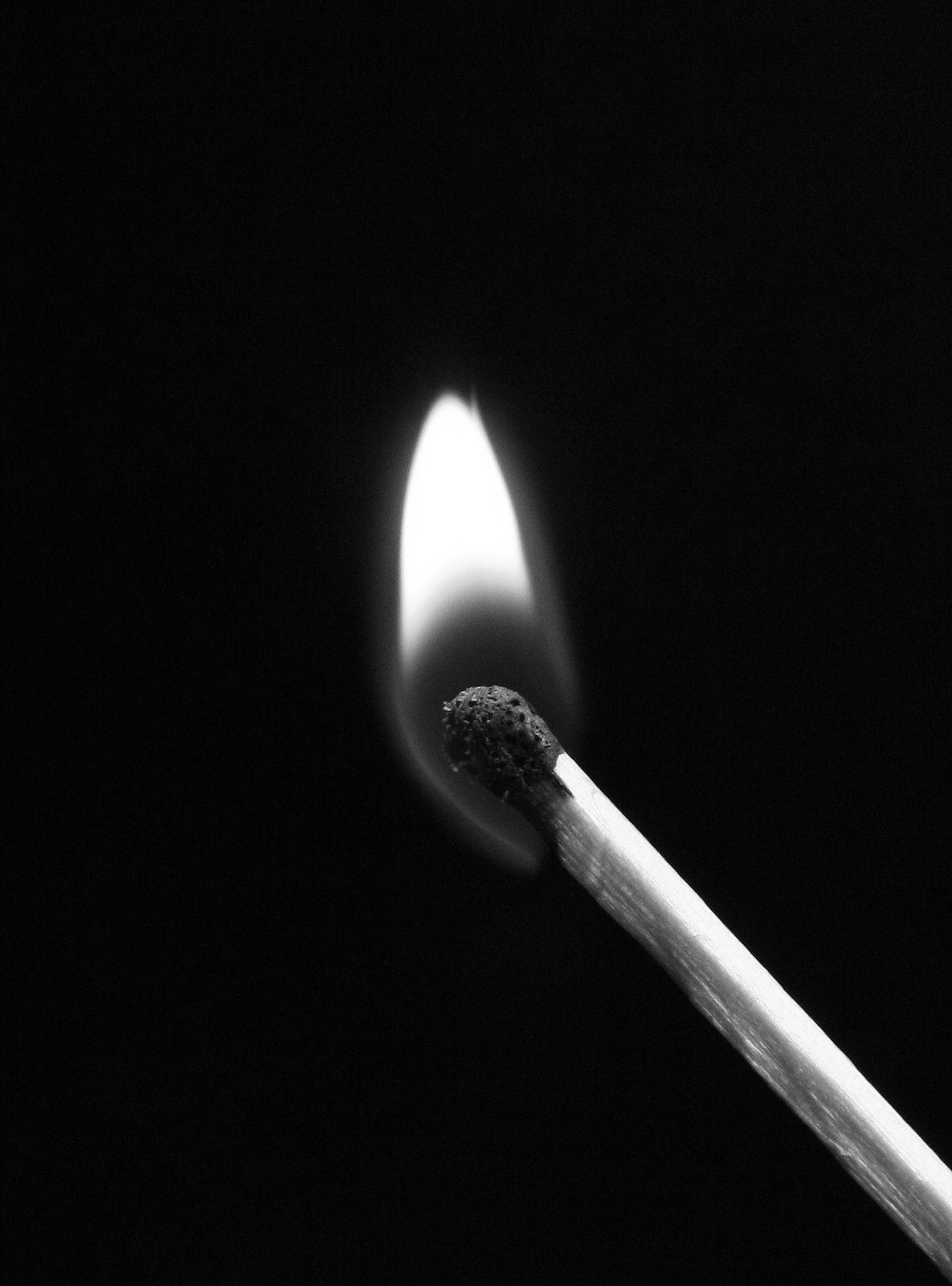
Image, Match, by Mark Greenwood on Flickr

 leaf stitch word