and no bees.
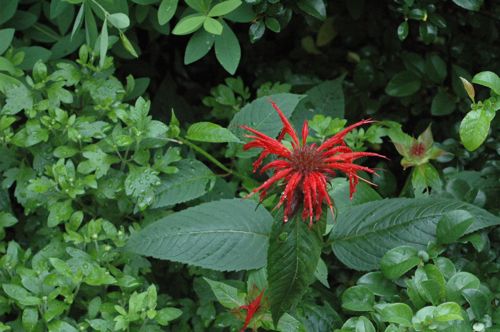
bee balm, 7.1.2009
Where do bees go when it rains, and when it rains so much?
and no bees.
bee balm, 7.1.2009
Where do bees go when it rains, and when it rains so much?
Photosynthesis, which occurs in plants, algae, and some bacteria, uses energy from sunlight to convert carbon dioxide into organic compounds. This is food, and plants need food to grow.
If you live in Massachusetts, you may have noticed that there has been what I would call NO SUNSHINE in all of June. Well, maybe there was one day, or two afternoons. Overall, though, there has been a noticeable lack of sun.
And, yet, my sunflower plants, along with the grass, hydrangea, hosta, ajuga, clematis, and all else that is green, have grown steadily. The tallest ones are up to my hip. In a rare and transient moment of June sun, Eli took their picture:
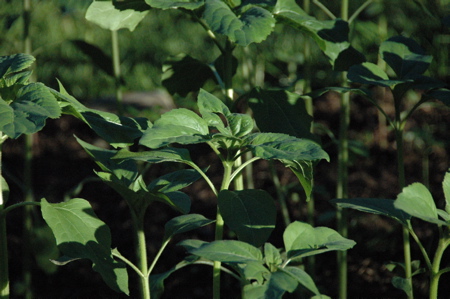
sunflower plants, 6.16.2009 at 6:25pm
Their continued growth is evidence that something continues to happen even though I might say that growing conditions are limited or unfavorable: wet, dark, cold.
What meager light we’ve had seems to have been enough.
Maybe it’s worth us remembering in our own lives that, even when conditions seem limited, subtle processes continue to unfold and yield good things: ones we don’t force, ones that surprise us.
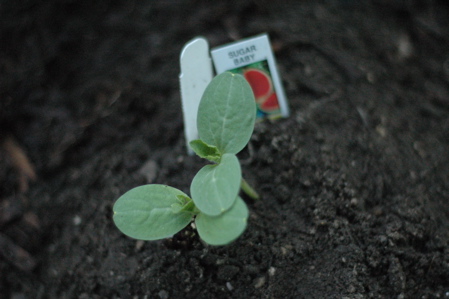
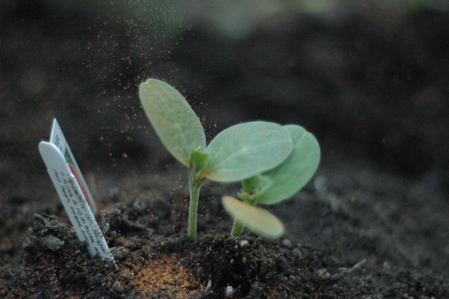
At the urging of Grace, I planted one watermelon seedling, in a little hill I made in a leftover patch among the sunflowers. It looked so attractive, a bit of green surrounded by black dirt, and it occurred suddenly to me how attractive the squirrels would find the bare dirt. So, after some thought, I sprinkled on them some cayenne pepper, which looks, in these photographs by Eli, like fairy dust.
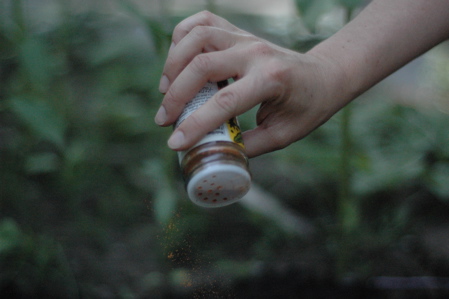
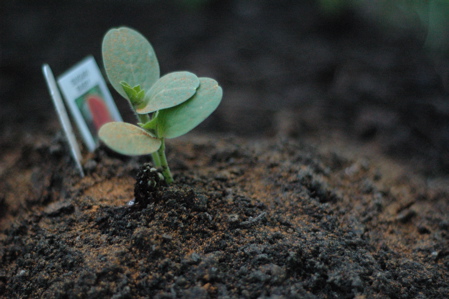
I heard this today, as I stood in the check-out line at my local grocery store. It’s a revision of a well-known saying, and another customer was sharing it with another clerk.
That seems good to remember.
And what was I buying at the grocery store? I’ll tell you, and I’ll also tell you that I noticed, as my 14 or so items were picked up one by one and scanned, that none were essentials.
Not only do we live in an age of complaint, we (still) live in an age of excess. I mean, none of those things are items I need. And yet I bought them, and will again.
My friend Lisette once said something like this: People’s contraries make them interesting. She was taking about a feminist she knew who was obsessed with (her own) personal beauty, and I found this alarming. Lisette found a way to be more tolerant.
It’s gloomy and wet today, and I was thinking about contraries as I was planting some astilbe in the dry strip of shaded dirt that runs alongside our garage and next to Bob and Mary’s fence. Over my head, the neighbors’ scraggly hemlocks protected me for a while from the rain. Then, the branches got soaked, and the rain started dripping on my head and bent back.
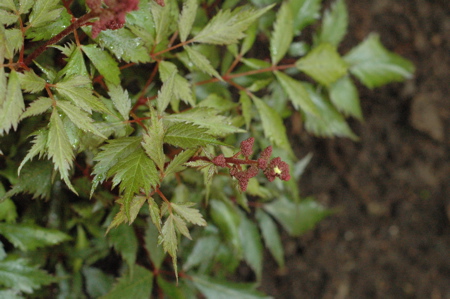
Mite on astilbe plume, 5.29.2009
I kept going, even though I felt as gloomy as the weather (and maybe it was the weather). I was determined to get the five astilbe in the ground because the tight-fisted buds on their plumes seem about to burst and I’d like to see that effect in the garden and not in the plastic nursery pot.
As I was digging, I contemplated the poor soil and noted an absence of worms and I wondered, for about the 50th time, if I should buy some worms and try to get them established here and thereby really perfect the soil. Or, maybe, I should relocate worms from other parts of the yard, where I have seen them, to here. Continue reading
Saturday, May 23, 2009 (Brookline, MA): A sunflower folly, planted by local resident Jane Kokernak on May 10, was unveiled today. Early reports suggest that seeds sprouted consistently across the bed. Kokernak, who paused in her sweeping and bagging of tree pollen, remarked, “I’m pretty happy with the results so far.” She forecasts dramatic growth in the seedlings over the next three months.

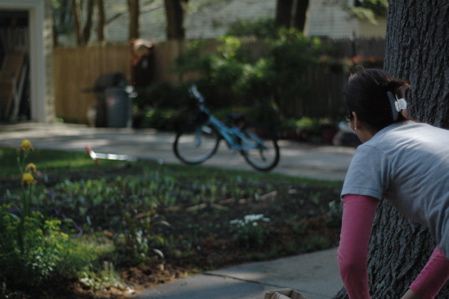
Photographs by Eli Guterman.
This is what hope looks like.
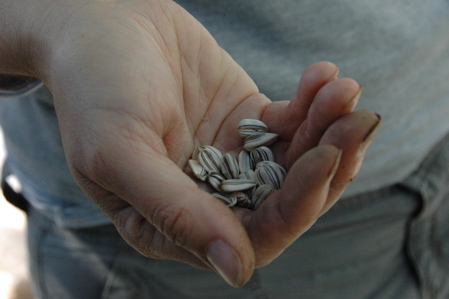
During a spring semester clouded by the recession and my own economic downturn, I forced myself to take on tasks that were both optimistic and doable. I tended to my students and their work; I cultivated ties to colleagues and friends; I hoed the already neat rows of my resume; and I scattered queries for teaching jobs.
And I planted sunflowers, a huge patch of them. A “folly,” it’s called. In the midst of the sober and the sensible, I had to do something dramatic, quirky, and above all possible. I mean, sunflowers I can grow. (So can you.)
Along with my helpers Grace, Jimmy, and George, I stuck those seeds in the dirt only 10 days ago, on May 10th. It’s too soon to tell whether the folly will be a success. Amazingly, however, there has been an unexpected bounty on the teaching front: I’ve been rehired, as funding to the MIT writing program has been restored for the coming year.
And I am so… HAPPY! I feel the way I expect those sunflowers to make me feel when they bloom in August.
There’s still time for you to plant your own sunflower folly, according to the tutorial that starts below. The original concept can be found in Katherine Whiteside’s The Way We Garden Now (an excellent, unfussy, and imaginative garden project book, by the way). Variations are by me. Continue reading
😉
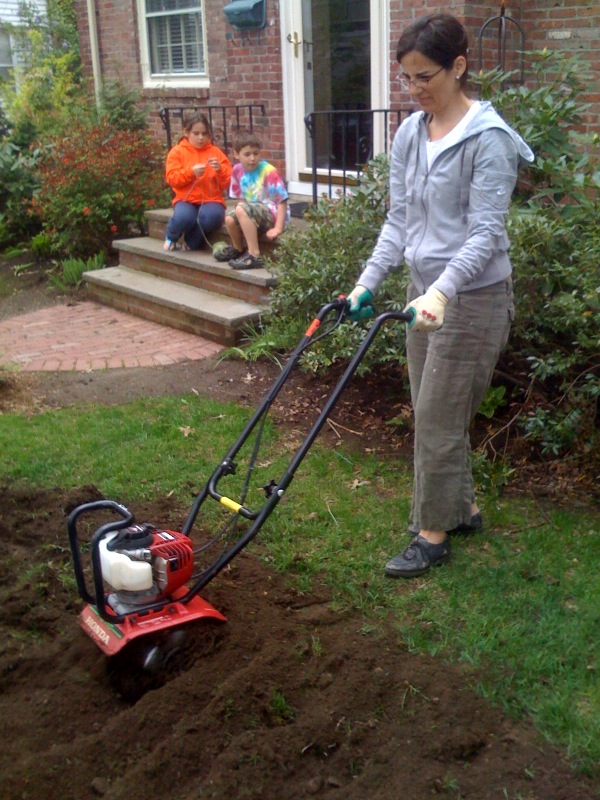
Work begins on the sunflower folly. Tutorial to come.
—-
Tiller by Honda (the Mantis was not available). Picture by Jimmy. Audience by George and Grace. Blog post title by the Pussycat Dolls.
Here’s what I want (to rent) for Mother’s Day, a Mantis Tiller.
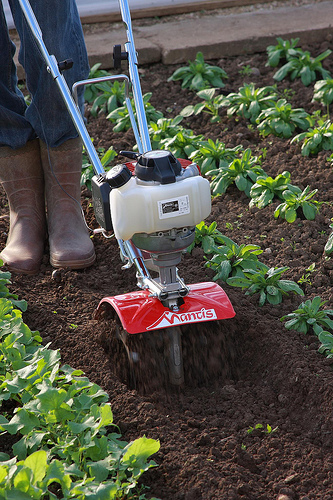
It’ll help me break ground, without breaking my back (or someone else’s), for one of my summer gardening projects, a sunflower folly.
—–
Mantis Tiller image from dgp’s 2008 photostream on Flickr.
 leaf stitch word