A is for awesome.

Lydia and I were talking about school, hers and mine. We considered motivation, and what fires people up to be and do the best  they can. She told me about her high school history teacher and an upcoming presentation assignment that Lydia wants to nail. In part, she is motivated by the teacher’s rubric:
A equals awesome.

B is not bad.

C is meh.

D is “Um…”

Lydia is aiming for “awesome.” I would go pretty far, too, for an authentic awesome. And if on the first draft I got a meh, I might laugh at the teacher’s humor, figure out what to do, and keep trying.
—–

Photograph of the CN Tower, Toronto, August 2010.

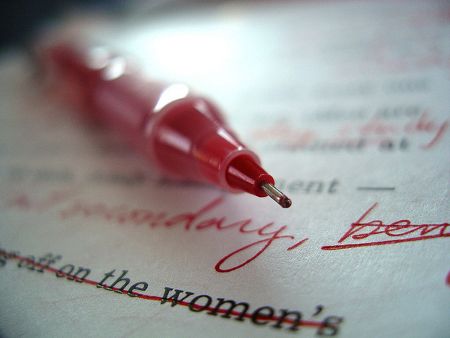
Rethinking the red pen

Grace promised to loan me a fine point pen with which to mark a stack of summaries. I opened her pencil case and found only a red one.

“I need a black one. All you have is red?”

“Yeah.” Grace, who sat across a table piled high with her homework and mine, looked at me quizzically.

“I can’t write on my students’ work with red ink.”

“Sure you can,” said Grace. “And, why not?”

“Well, because the red pen is perceived as… harsh, um, kind of censoring. A pencil, or even a green pen, seems kinder.”

Grace got that Mom, You’re a Lunatic look on her face. “I wouldn’t mind the red pen.”

“You wouldn’t?”

She sighed. “If I used perfect penmanship to write something, and then the teacher wrote on it with red pen and messy handwriting, that would be bad and probably hurt my feelings. But if the teacher has nice handwriting like you, Mom, and wrote carefully with a red pen on top of a student’s nice work, I wouldn’t mind.” Continue reading

No nightlife, no boogie

No doubt there is nightlife and boogie in Toronto, but we didn’t find much of it. That’s probably because we — traveling with children ages 10, 14, and 17 —  weren’t looking for it.

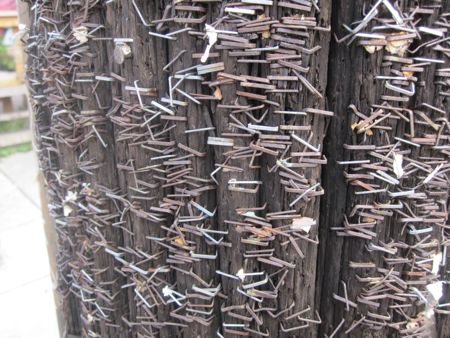
Staples in telephone pole, Kensington Market. By Lydia.

Still, we hoped to have our own brand of fun. And we did. What follows is a handful of highlights from the Toronto leg of our summer vacation, August 10 – 15. (The Cooperstown and Niagara Falls legs are documented in a previous post.)

Leg three: Toronto, Ontario

We drove into the city on a Wednesday afternoon. Lydia, sitting in the way back, observed, “This is another one of those cities with cranes. Like Chicago.” I had to agree.

Another city of cranes.

After dragging our bags into our hotel on Yonge Street, at one time designated the longest street in the world, and feeling daunted by possibilities for What Now?, we walked blocks and blocks to Yorkville Ave. for ice cream. At Summer’s Sweet Memories, Eli and I tried their famous flavor, Toronto Pothole: almonds, marshmallows, chocolate chunks, and peanuts in chocolate ice cream. Later in the week, we went back again, for the same flavor. That was one of my good delicious vacation ideas. Continue reading

Escape from America

This summer marked our third family car trip to Canada. On occasion, we have joked darkly and said that our habit of traveling there is practice for when the U.S. reinstates the draft, and we have to hightail it north to keep Eli and perhaps the girls from compulsory service. Interestingly, during our stay in Toronto I read a biography of Jane Jacobs and learned that she and her husband moved to that same city in 1968 to keep their two sons from the draft, and she easily made it her home for the rest of her long life.

More immediately, though, we love it: a chance to go and be somewhere different, cool, and not America without the hassles of an airport and high price of (five!) airline tickets.

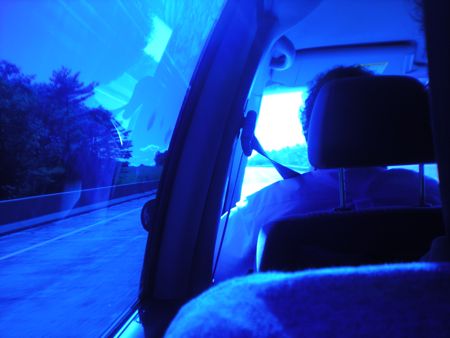
Driving by Jimmy. Back seat photo by Grace.

Plus, before we cross the border, we get to drive through some nice country in Maine, Vermont, or upstate New York and visit friends and stop at some out-of-the way U.S. attractions. This was so on our recent trip through Albany, Cooperstown, and Niagara Falls, on our way to Toronto.

What follows, in this post and the next, is less a summary than an accounting of high, and a few low, lights of our August vacation. Continue reading

Unpretty potatoes and their lessons

There are beautiful ideas, and there is reality.

I learned this from a tutor I was training, several years ago, when I worked in the Simmons College writing program. Her name was Kristin, and she told our group about a time she absolutely could not write a paper, although she had “written it in her head,” and it was perfect. So she went to her professor, and she told him about this perfect, imagined paper and how she was unable to write it. He said to her, “All you have now is a beautiful idea. And beautiful ideas are not writing.” He handed her a lined, yellow pad of paper and looked at the clock. “I’ll be back in two hours. Write,” he said. Kristin sat at a desk in the hallway and wrote. And what she produced was less perfect than what she imagined producing, and yet it was real. The words existed in the world and did not merely float in her head. “There,” the professor said. And the paper turned out to be neither good nor bad, Kristin told us.

If a creative person has high hopes for her work, she must learn to tolerate the gap between the idea and its manifestation.

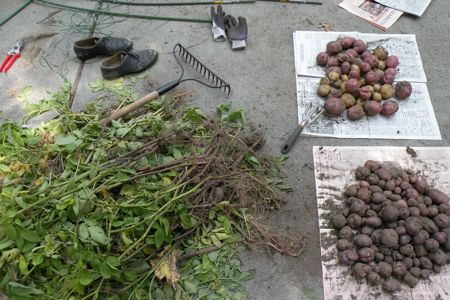
Harvest done. Things arranged.

Yesterday I completely harvested my first crop of potatoes. I waited for the soil to dry from a previous rain, and then I clawed around each plant, exposing the stalks to the first potato. One at a time I grasped the plant down near the exposed soil line and pulled gently and with a little vibration, as though wiggling a tooth out. I piled up the stalks on the driveway. I piled up the potatoes — gold, red, and purple — on dry newspaper. My dark shirt absorbed the sun and my scapula were like hot wings. Continue reading

Scourge of the season

We are well into summer, so it must be time for a head lice outbreak. More and more people searching for “head lice” and “lice treatments” and “nitpicker” and so on have found their way to my blog recently because I have commented on this topic before. And WBUR recently did a story on the parasites.

While lice, at first, are appalling, they are not so disgusting after you get used to them. I describe my fascination with head lice, and the physical closeness they prompted between me and Eli, Lydia, and Grace, in my researched essay “Little Creatures,” which was originally published in P•M•S poemmemoirstory 9. Here’s a taste:

I dip the fine-toothed louse comb into a container of burning hot water and swirl. Captured ones float for a few moments before sinking. The lice are dark enough in the container of water that I can count them. Occasionally the count seems not to add up so I hold the comb up near my eyes to look for bodies trapped like seeds in human teeth and find them there, suspended sideways between the plastic teeth. Their lash-like legs, scurrying in air, seem always to move in this workmanlike way, regardless of footing, unable to take me in as a threat, not afraid of me as a predator in the way that mice are afraid. I make my thumb and forefinger into pliers and close over the head and tail of each and drag it down the space between tines. I feel the substance, like nut meat, and I imagine eating them. I do this enough times so I think always of eating them when they are pinched in my fingers like this. It would be so easy to eat them that I feel drawn to doing it in the way I feel drawn to letting my body go over the barrier at the edge of the falls or on the upper level of an open air parking garage. It’s that close.

I do not eat them. It’s not something that I would do.

—–

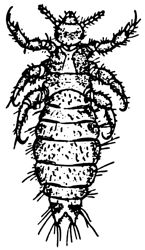
Image credit: wikimedia commons.

Old broads in sequins and rouge

I’ve heard it said that if you want to talk to your kids, give them a ride somewhere. I’d like to offer a modification to this advice — if you want to talk to your daughter, take her shopping and haunt the dressing room.

Lydia needed shorts for an upcoming trip with her chorus. Having recently been at Old Navy with Grace and seen mountains of them, we headed there. Lydia filled her arms with what I think of as disposable clothes. (If anyone wants to view the dysfunctional relationship between the U.S. and the developing world, walk into your local ON, head to the clearance section, and see tables piled with t-shirts made in Bangladesh marked down to $3.)

I browsed, too, and met Lydia in the dressing room. “What do you think of this?” I asked her. She may not need my style sanctions, but I need hers.

“Mom, no,” she replied. I love her eyeroll.

“Why not? I love this gray color.”

“Mom. Sequins.”

“But, Lydia,” I implored her, “It’s a peace sign. I’m for peace.”

“Yeah, but you don’t have to wear it on a t-shirt. In sequins. Plus, you’re old.”

“I might buy it.”

“Don’t.”

I didn’t.

And yet I’m still tempted. Something draws me to this t-shirt, and it takes willpower to keep Lydia’s advice in mind.

Not all women resist the call of the sequin, however. This morning Lydia and I stopped in the bagel shop on the way downtown, where I was dropping her off to meet the bus that will take her chorus on the trip that necessitated the purchase of shorts. Most of the people getting bagels at 9:30am in the morning are old-timers. As I waited in line, my eyes were drawn to a woman whose back faced me: curly yellow-blond hair askew, wedgie flip-flops, cropped stretch pants, lumpy purse, and a droopy Pepto-pink sweatshirt decorated with an oversized sequined and plastic-jeweled heart. Continue reading

– Little bursts

During one sustained yoga pose (downward dog), I looked at my hands, fingers splayed on the mat. Wow, I thought. Look at you. I acknowledged them for 45 years of work. No appliance could do what they’ve done and still be so capable.

Later, lying on my back, with my legs straight and feet in the air, I looked at my bare knees and calves, and I liked them. Marvels.

My regular habit, after Wednesday yoga, is to go to the Clover Food Truck on Carleton Street and get a soy BLT, my discovery of the spring. At $5, it’s a perfect food.

Today I sat on a bench next to the parking lot, half in the sun and half out, and ate it. On the bench perpendicular to mine, a young woman and man talked about happiness, and all the pressures in the way of it. She said to him: “There are too many choices. And having to choose work you love, or a person you love, is overwhelming. I read that people are less happy when they know there is other work, or someone else out there.” He said to her: “I said to my therapist that, among all my options, the least disagreeable to me is dentistry.”

One pigeon walked on the cement pavers near my feet. Of course, pigeons do not fear us. It came closer and seemed to stand there, turning and waiting. I looked at its three-clawed feet and stick legs. Do you know they’re pink? A dark rose. The feathers are less gray than a dusky purple, with shimmers of green around the neck.

In Olive Kitteridge by Elizabeth Strout, on the occasion of her son’s wedding Olive thinks about what she knows of loneliness and ruminates, too, on its antidote:

Olive’s private view is that life depends on what she thinks of as “big bursts” and “little bursts.” Big bursts are things like marriage or children, intimacies that keep you afloat, but these big bursts hold dangerous, unseen currents. Which is why you need the little bursts as well: a friendly clerk at Bradlee’s, let’s say, or the waitress at Dunkin’ Donuts who knows how you like your coffee.

Or a sandwich from a truck.

On the way home, I stopped the car for a few seconds where Ames Street joins Memorial Drive. A few pedestrians passed in front of me, which made me turn my head to follow them. I saw a woman holding a toddler, still awake but slumped in her arms, the child’s head lolling on the mother’s shoulder. I remembered the slack weight of a baby against my chest: that closeness, that power. The child held out her own hand and looked at it, turning it palm down, then palm up. She closed her fingers into a little fist and looked at that, too. There was no haste in her movements. She could stare at that hand and turn it over and over, forever.

– My very own teacher

I met with a graduate student today, whom I interviewed for a study I’m conducting on the poster session. At one point in the interview he paused in answering a question about himself and interjected, “I’ve got to give a shout out to my Dad.” And then he told me something he had learned from his father, a professor.

with first teachers, on the beach, 1966

Today is my father’s birthday. My father is a teacher, too. Although I am not aware of following exactly in his footsteps (he taught math), I’m sure I often tiptoe in them.

In honor of him, I share with you an excerpt of a reflection I wrote in 2003 for a grad school course on teaching writing. If you stick with it for a few paragraphs, you’ll find out how powerful it is to grow up with a teacher in your very own home.

* * *

Rewards

First, a few words about my beloved third grade teacher, Mrs. Eva Doyle.  I remember three things I learned from her: the multiplication tables up to a factor of eight, all the state birds, and crocheting.  The state bird project sticks in my mind because of the pure pleasure for me in colored pencils, detailed work sheets, characteristics of each bird (a yellow throat, for example), and beautiful bird names.  Multiplication memorization and crocheting are also vivid, because of how Mrs. Doyle used the promise of a needlework lesson to reward math mastery.  When every student in the class had made his or her way through the tables, she told us, the class would learn to crochet, as a group.  Eventually, after some duration of time I do not remember, Mrs. Doyle brought in a bag of yarn balls and a crochet hook for everyone to keep.  We pulled our 20 or so chairs into a circle, and our teacher walked around our perimeter, leaning over our shoulders to give help. In this manner, Mrs. Doyle taught us girls and boys how to make a chain, then a daisy chain, and finally, a granny square.  The ambitious kids went on to make five granny squares, with a grab bag of colors provided by Mrs. Doyle (from her own money probably), and stitch them together to make a hat. I made one of those hats. Continue reading

– Last skating day

We missed the last skate, Grace and I.

By last skate, I mean that we missed the last day of the season at the outdoor rink at Larz Anderson Park.

On Sunday night, the last skating day, the one we missed, I sat downstairs in the living room, writing comments on report drafts. Around 10 o’clock, I heard the sound of weeping. A child. I went upstairs and located Grace, who had woken up. She cried softly, with a kind of tinkling music that probes your thoracic cavity with its fingertips.

“What’s wrong? What’s wrong?” I murmured.

She didn’t move or thrash. With her lips a little mashed by the pillow she said, “I just feel sad. I don’t know.”

“Sad about something?” I asked.

“Just sad.” She paused; she wept. I could see the sparkle of her opened eyes even though the room was dark, because the light was on in the hallway and her wet corneas caught it. “We missed the last skating day today.”

“I know. I’ve been thinking about that. We should have made ourselves go.”

Grace sighed. “It’s that, but it’s not just that.”

I know that, too. Sometimes a person just feels sad, and a concrete event amplifies the sadness, but it doesn’t entirely explain it.

We adults often believe that we own those deep emotional cavities that inexplicably open up inside a person from time and time. While they last and remain open, nothing will fill them. One thing that being a parent has taught me is that children experience the unfillable eternity, too.  Lydia, at six, sobbing, retorted when I asked her what was wrong: “If I knew why I was crying, I wouldn’t be crying!” Eli, at ten, soberly informed me: “Mom, if you think that kids are carefree, you don’t know.”

What is the comfort when there is nothing to say? On Sunday night, the last skating day, I climbed into bed with Grace; I was tired anyway. She flung her arm over me. We slept together for an hour, animal to animal. Eventually I got up, looked again at her, and shuffled to my own bed.

—–

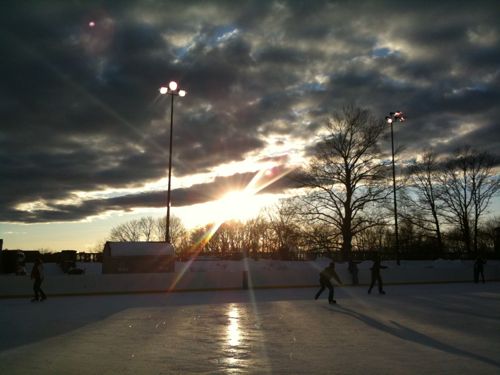
Photograph of the rink at Larz Anderson taken by Grace Guterman at 4:30pm on February 18, 2010, ten days before the last skating day.