Flimsy, flimsy ego

rubber band heart, found by Grace on table, June 9

The ego can only bear so much.

On Sunday — skates tied, blood sugar checked (low), juice box drunk, and gloves on — I stood for a few minutes at the entrance to the Babson ice and watched the activity. There were about 8 young girls in shorts, heavy tights, cute sweatshirts, and lush ponytails jumping and turning and skating backwards with precision and verve. There were an equal number of adults in black track pants and black parkas standing near the boards, studying the girls. Occasionally, a girl would skate over to one of the adults and listen to instructions. Sometimes, the adult would demonstrate, beautifully, what s/he wanted the girl to do. The girl would do it.

And there was me. I stood there for a couple of minutes, hesitating. I had already paid my $30 to get on the ice for freestyle/practice time, and I had an appointment with Fred, who was already out there with a young girl, about halfway through the 80 minutes. I had arrived intending to practice. I stood there, losing my nerve.

As I told my friend Rosemary last week, as we stood in front of the shelf marked “Buddhism” in the Trident, my internal dialogue, for better or worse, is turned up pretty high. (I’ve heard this called “mind chatter.”) Sunday, as I stood at the gate to the Babson ice, I thought, “Why am I doing this? Nothing can come from it.”

“But I am doing this,” myself said to myself. I began.

As I skated, I was overcome with intense self-consciousness, and not of the good kind. I imagined myself getting in the other skaters’ way — the real skaters — and so I tried to stay out of their way. I imagined that one coach, a woman about my age, was giving me the hairy eyeball, as if to intimidate me off the ice.

I practiced the easy things, not wanting to make a mistake among the masters. I scolded myself. I propped up my ego by remembering something Grace once said when I was skating with her and confessed to doubts about my ambition. “Mom!” she said. “At least you’re out there and not sitting on the bleachers!” I practiced harder things.

I imagined again that hairy eyeball turned in my direction. I mentally constructed some believable excuses and apologies I would give to Fred when my appointment with him began.

Get a hold of yourself, Jane. Think other thoughts. Continue reading
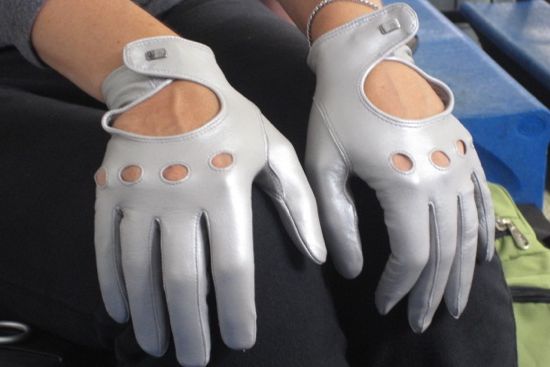
The girl with silver hands

On Tuesday night, after a gap of five years, our friends the Zimmers came to dinner.

Ulrike and I met 17 years ago, in a manner that is not unlike the beginning of a romance. I was sitting near the window in a coffee shop in Brookline Village, looking out, and she was walking by, looking in. Our eyes met, and, although we were strangers, we smiled a greeting. The next day, or perhaps the day after that, we recognized each other at our children’s nursery school. Instantly, it seems now, Ulrike and I were friends.

We were neighbors during the time she, her husband Claus, and first daughter Pauline lived in Brookline. I look back on that as a golden time, although some of what we discussed during our countless moments together, alone or with Pauline and Eli, was rooted in the struggle to figure out who we were now that we had become mothers.

And, I dare say, if we had had more time together this week, we would have returned deeply to those mutual concerns: Who am I? What work am I most suited for? What do I want for myself?  Where is that line between where others end and I begin? When the Zimmers moved back to Germany in early 1996, I lost a daily connection to a rare and intimate friendship. Yes, letters and email and infrequent visits can keep us in touch, but we are missing out on the incremental and ordinary comforts of being nearby. Shared life.

On Tuesday night, Ulrike brought us presents. To me she gave a pair of beautiful, silver leather gloves from a famous German glovemaker. “For the skater,” she said. I felt known by my friend, as though she had recognized the ‘me’ that I am, alone. Not the mother, not the teacher, not even the friend. A true gift.

Today I wore them for the first time. Little by little as I learn how to skate, I have been progressively marking my commitment to it in concrete ways: the purchase of fitted ice skates; the private lessons; the summer practice time; notebook; and gear bag. This is my first piece of costume.

I skated neither better nor worse today. In fact, one of the rink regulars, whom I recognized but don’t know, skated up to me and gave me some unsolicited “skater’s advice,” as he called it, which, he promised, “will give you more power.” (I found this to be extremely irritating, and I wish I had had the perfect comeback. Mad at him, I turned my back, but later tried what he suggested. I vow, though, to never thank him.)

The whole time I skated, I felt my gloves on my hands, and they seemed to be helping me steer into the future, when I will only skate better.

On our last afternoon together, Ulrike was brainstorming ways to get me and my family next to Munich for a visit. (Business trip? Frequent flyer miles? House swapping?)  “We cannot let five years go by again,” she said.

“Yes,” I say. Our words make a promise to the future, when we will see each other again.

—–
The title of this post is an homage to the Brothers Grimm’s tale, “The Girl with Silver Hands” or “The Girl without Hands.” The photographs were taken by Grace Guterman.

Skating story, told and retold

This week, for the first time in a year, I saw my friend Lisette, who is like me a teacher and unlike me a former college athlete. Around the time I started teaching college writing (eight years ago), she said to me, “It’s good to do one new thing every semester that gets you out of your comfort zone.” This was an idea she had picked up, I think, from her college volleyball coach.

On Tuesday afternoon at the playground, I told Lisette and her oldest son Griffin about a little skating accident I had recently, and how the coach made me get back on the ice as soon as I could stand again.

It’s good to have friends and coaches that prod you to take risks, especially when you are not naturally inclined to some kinds of them.

And, of course, I had to write about my fall. Find the story, published here.

Seven lessons from a middle-aged beginner

There is beginner’s mind, and then there is beginner’s body.
*
Around the time I turned 40, I got this idea that I wanted to become a good skater by the time I turned 50. The impulse hit me when I was at the rink in Brookline, skating with the kids, and I noticed a woman older than me who was powerful and fluid on the ice. I wanted to skate like her, and, even though her skating was more advanced, this suddenly seemed doable to me and desirable. Later, I found out she had started skating in her early 40s when her son was playing hockey, and she found herself looking at the ice and longing for it. So she began. At 60, when I met her, she was strong and graceful. This, by the way, is the first lesson in learning something new and hard: (1) Look for real-life models.  Famous athletes may inspire us but, because their talents are stratospheric, can’t really convince us that we can do it.

I had been on the ice hundreds of times — if you grow up in Massachusetts, as I did, it’s almost a requirement that you get a new pair of cheap skates every year for Christmas and spend lots of time clumping around on frozen ponds or public ice rinks — but I couldn’t  skate well. At age 40, I started taking group skating lessons for the first time. I learned a lot, starting with this basic fact that skates have edges (and if you have two feet, there are four edges altogether, or eight if you include forward and backward), and control of those is the foundation for everything. I also learned, from a teacher named Mark, that you can be afraid to do something and still make yourself do it. “You will fall,” Mark said. Being mindful of the possibility of injury makes it harder to try new things as an adult, and this fear must be managed in order to proceed. Which leads me to this: (2) Be afraid to fall, and skate anyway. I am, and I do.

You can only do beginner lessons so many times before you start to bump up against a ceiling. This winter, at age 45 and at my halfway point, I decided it might be time for private instruction. Happily, the teacher of the group lesson I was taking also teaches privately, and the transition was easy. I discovered, too, that the decision to do this was a signal to myself of the seriousness of my goal. You can’t hide in a 1:1 learning situation as you can hide in a group (and one can even hide, paradoxically, by excelling against other beginners). Another lesson: (3) When it starts to get easy, become more vulnerable to the task.

It’s a luxury to have the devoted instruction of an accomplished professional for one hour a week. (No wonder students like meeting with me alone for an hour to work on their writing.) There is an intensity to the learning experience that is different from a group experience that is a deep pleasure. The learner is also scarily exposed in a private lesson; there is no stepping to the side to let someone else skate ahead, and there is no half-assed trying just to get a little cheap credit for having gone through the motions. Continue reading