Writing teachers, when they read drafts, have a hard time resisting the temptation of the ideal text. As we read student work, we may be simultaneously reading — or really, creating — an ideal text in our mind of what that draft could become. No doubt this ideal text is based on our knowledge of other texts we have read and perhaps even written ourselves.
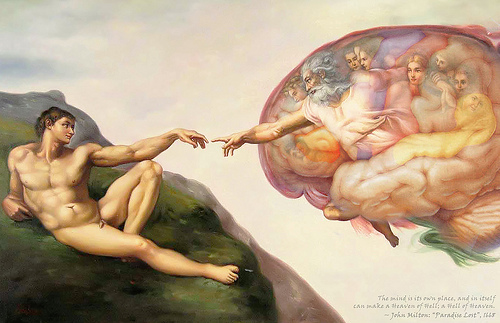
Ideal texts may help us see our students’ work ambitiously, as though all writings hold great potential. Ideal texts may also prevent us from seeing the work for what it is and for what it wants to become, or for what the writer wants it to become. Brannon and Knoblauch (1982) describe how an awareness of ideal texts and the inexperience of students can lead a teacher in a way to “appropriate” her students’ work (158).
The kinds of texts we encounter at school can be more than essays or reports. Oral presentations are texts. Videos. Portfolios. A proposed experiment. In the project labs I am assigned to at MIT as a communications instructor, it seems to me that the engineering and science faculty read or consider their students’ independent design and research projects against some ideal that the faculty themselves conjure in the acts of reviewing and teaching.
This ideal-text creation is largely optimistic, and, at the beginning of the semester, we see only potential. The push is forward. Right around now, though, with only two weeks before the last day of classes, our ideal-text creation machine is seeming a little peaked, which can paradoxically lead to teacherly acts of will and desperation: extra writing conferences, more office hours, and lavish feedback.
There’s another tarnished ideal text we teachers are facing right now and that is this: our own teaching. Perhaps I should drop the communal “we” right here and admit that the tarnished ideal text that I am facing, at this late moment in the semester, is my own teaching. Way back in September, what I planned to accomplish and even be as a teacher was like a vision. And now I hold the reality of my teaching in my hands like a small pile of stones. Certainly, I have amassed something — I’m a better teacher now than I was 7 years ago when I started, and surely this has happened incrementally, including this semester — and yet the gains are modest-sized.
Oh, I’m not completely self-effacing. Not at all. As much as I’m seeing the shortfall in my work, I see too what I have achieved. In fact, nearing the end of the semester can be a weird time of reconciliation. Somehow, by making an account of what I didn’t accomplish, I force myself to look for what I have been doing: 4 classes and 60 students, and it looks like they’ll all reach the finish line intact and with a few flourishes.
I’m starting to reflect, too, on what my students have achieved, as I’m talking to them in meetings and conferences and as I think of them. I am reminded that they are not only the texts that they produce; they are very smart people to begin with who are growing as thinkers and doers, and teammates and teachers. In class, meetings, and peer reviews, I observe them teaching each other more and more. Often, I feel them teaching me.
—-
Image, “Brain of the Sistine Chapel,” by tj. blackwell on flickr.




 leaf stitch word