– Park Street busker

“Excuse me.” That’s what I said to the couple blocking my passage from the turnstiles to the station at Park Street. They were just standing there, looking up at signs, their backs to me. “Oh, sorry,” he replied, in a British accent. I moved quickly past them, no eye contact, up and around the low barrier near the track, and I felt a few seconds of regret for not being nicer to them.

Down the middle stairs tiled red, into that basement that’s like a big grungy shower room — all those worn white tiles — to wait for the train to Kendall Square. It was 4:50pm, and I was leaving GLAD and heading back to MIT to get my car to pick up Grace at BSED. Three points of my life, in acronyms.

I felt neither haste nor leisure. People brushed by and pressed into each other. There was another middle-aged pair, a man and woman, chaperoning a bunch of teenage girls, some wearing Red Sox “merch,” as my kids call it. Was there a game today? Sometimes I eavesdrop on people, but this afternoon my spying tendencies were worn out.

Against the red tiles of one of those square pillars that hold the Green Line and all its trains up over the Red Line’s sublevel, a small man sat. His black guitar case was open in front of him. A music stand, adjusted low. An acoustic guitar, a high buttery voice, a Spanish song. “Noche …  noche…  noche,” was the only word of what he sang that I recognized. Another verse, full of the sound of longing but no words I knew, and then again, “Noche… noche… noche.”

I thought of taking out my phone and taking a picture, a video even, so that I would have a document to share with someone. And then I realized that what held me to the moment was that it would come and quickly go. Anticipating that its life was only minutes long, I soaked in all of it — his singing, the sound of words I didn’t know, the crush of tourists and fellow commuters, his smile when I put $2 in the guitar case, his gold-rimmed dark glasses removed when I got close up to him.

The moment would be gone, I knew, as soon as the train came. Which it did.
– Big pond, many fish

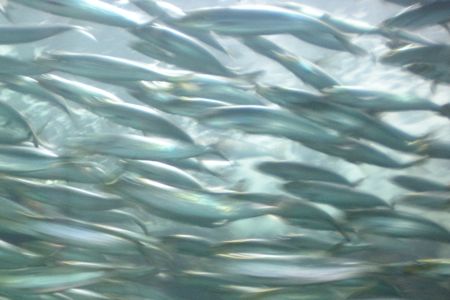
I missed the 4C’s convention in Louisville this year (sponsored by the Conference on College Composition and Communication), which is a biggie in the teaching writing world.  I went last year and even gave a presentation, one among hundreds of presenters. This year, Alex Reid went, and he did some basic arithmetic that describes how dilute the audience gets at one of these huge conferences where everyone is vying for a little sip of the attention water. He estimates that, on average, most of the 3,000 attendees make it to 6 out of about 600 panels and that most panels attract between 10 and 30 audience members. That’s the thing about big ponds.

I was swimming in another school of fish last weekend, attending the 2010 ACPA annual convention in Boston (sponsored by the American College Personnel Association, the leading organization for student affairs professionals). It was a good chance to hang out with James and also reconnect with that world, in which I felt more a part when I worked in academic support and writing centers. Even though I no longer have official student development responsibilities, I do believe that I will again, someday, and that in the meantime I continue to be a deeply interested observer in how undergraduates mature and how the academy can support their development in thoughtful and humane ways.

I went to five or six panels; I took notes. Rather than writing a summary, I’ll try to capture what floated to the top and what ideas have stayed with me enough that I’m still thinking about them a week later. Continue reading

– What death tastes like

I’m upstairs, in the bathroom, about to hop in the shower (as my mother would say. One can’t actually step into the shower, or take a shower. Hop, we must.).

Suddenly, from downstairs I hear running feet, the slam of a door, adult gagging sounds, and child screeching ones. I go to the top of the stairs. Through my mind runs all the first aid procedures I’ve learned related to choking and heart attacks.

“What’s happening?!”

I hear Grace, off stage, yell: “Dad’s gagging.”

I yell back: “What’s wrong?”

Jimmy walks, coughing, to the bottom of the steps. “Oh, my god, it’s the DayQuil. It’s horrible.” He drinks water from a cup.

Lydia joins me on the upstairs landing. Like Jimmy, she’s suffering from a sore throat, and she was the first one today to sample the orange liquid cold medicine.

“It can’t be that bad,” I say to both of them.

Lydia rolls her eyes at me. “Mom, it literally tastes like drinking death.” (Note: emphasis Lydia’s.)

And now I know.

Meditation on adult fears

In graduate school, at the first meeting of an American poetry seminar that turned out to be wonderfully heavy on Emily Dickinson, the professor asked us to introduce ourselves by going around the table and disclosing our worst fears. As soon as she said it, the professor withdrew the prompt. “No, don’t say your worst fears, say your second worst fears. It’s too terrible, as an adult, to claim your worst fear. ” She paused. “What if it came true?”

My second worst fear is a wood chipper, those little green or orange monsters with big metal teeth that get lugged around by tree jockeys and that eat branches and trunks. Last fall, on my way to work, I saw one on Amory Street in Brookline and sticking out of it was not a mouthful of hemlock but the blue-jeaned legs and ass of a man. I was riveted and terrified. As I drove closer I could tell that he was intentionally face first inside the jaw, fixing it, I gathered. A couple of other tree guys stood around, unperturbed and waiting.

A healthy respect for the destructive power of machines may be rational (as may be the fear of waxing, which was the pick of another female grad student in my class). However, sometimes a fear grows until its size in one’s imagination becomes irrational.

A friend of mine, an artist, has an ex who has diabetes, as I do. Things are not going well for him, and I encouraged her to encourage him to make his way to the Joslin Diabetes Center, where he would get help with his medications, diet, exercise routine, and even his feelings of discouragement. “They will take care of all of him,” I assured her. The thought of this buoyed her. Recently she wrote to me: “Would you be willing to talk to him? He wants to go and he seems reluctant to go.” Ah, of course. Continue reading

Three E’s: a paradigm

Years ago, when I was freelancing as a development researcher and writer, I helped the director of a new institute on children’s health prepare for a speech. I did the research that framed her remarks, which she wrote and ultimately presented to an advisory board. This was before the proliferation of Web-available information (in fact, Lydia was 8 weeks old at the time — 14 years ago!), and I conducted the research like a gumshoe, going stealthily from library to library, consulting periodical indexes, photocopying articles, and interviewing researchers.

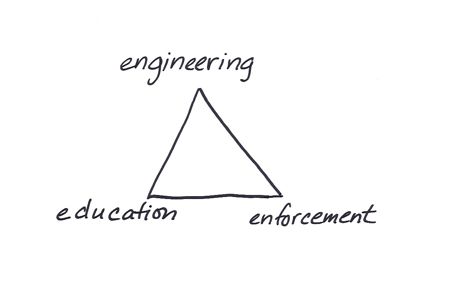
At the Educational Development Center in Newton, I spoke at length to a library associate who first interviewed me, as a way of getting a bead on my questions and assignment. She asked me if I was familiar with the “Three E’s,” a neat way to think about public health problems, and she drew a simple diagram on the chalkboard in her office.

She explained that there are three kinds of approaches to addressing and attempting to solve entrenched problems, like teen pregnancy or gun violence: engineering, enforcement, and education. “Say you want to address rising teen pregnancy. An education approach would be to design a school-based curriculum at prevention. You might try to meaningfully inform teenagers about the responsibilities of parenting and offer them pragmatic advice about contraception. An enforcement approach would be to segregate pregnant teens from the main school program — this might be a disincentive to nonpregnant teens. The engineering approach would be the offering of Norplant, free of charge and through a school’s health clinic, to sexually active girls.” She added, “Whenever you can come up with an engineering solution to a health problem, it’s easier and usually more effective because it minimizes the human behavior aspects that enforcement and especially education rely on. Education is the hardest way to affect change.” Continue reading

Resonance, wonder, and toys

In his essay “Resonance and Wonder,” Stephen Greenblatt writes about two powers permeating the works of art in museums:

By resonance I mean the power of the displayed object to reach out beyond it formal boundaries to a larger world, to evoke in the viewer the complex, dynamic cultural forces from which it has emerged and for which it make be taken by a viewer to stand. By wonder I mean the power of the displayed object to stop the viewer in his or her tracks, to convey an arresting sense of uniqueness, to evoke an exalted attention.

Read his essay (a .pdf is here), and your experience of artifacts in museums may be forever enriched as mine have.  In this post, I translate his ideas and use them to consider toys, Jane Eyre, The Matrix, and other things that stand in for objects.

When you first encounter an object — especially one you instantly are wowed by — you stand in wonder. There’s something really personal about that experience. You feel delight, surprise, enchantment. It’s an oh my god! moment. Greenblatt says that museums like MoMA amplify wonder with tactics they use to display objects, with boutique lighting, for example, which throws a pool of light around objects in a dimmed room, in the same way that jewelry stores and designer clothing shops do. Lighting isolates an object and hold it up for display. That isolation is important: it intensifies your wonder. It’s immediate, with no past or future; it’s love at first sight. Continue reading

– Last skating day

We missed the last skate, Grace and I.

By last skate, I mean that we missed the last day of the season at the outdoor rink at Larz Anderson Park.

On Sunday night, the last skating day, the one we missed, I sat downstairs in the living room, writing comments on report drafts. Around 10 o’clock, I heard the sound of weeping. A child. I went upstairs and located Grace, who had woken up. She cried softly, with a kind of tinkling music that probes your thoracic cavity with its fingertips.

“What’s wrong? What’s wrong?” I murmured.

She didn’t move or thrash. With her lips a little mashed by the pillow she said, “I just feel sad. I don’t know.”

“Sad about something?” I asked.

“Just sad.” She paused; she wept. I could see the sparkle of her opened eyes even though the room was dark, because the light was on in the hallway and her wet corneas caught it. “We missed the last skating day today.”

“I know. I’ve been thinking about that. We should have made ourselves go.”

Grace sighed. “It’s that, but it’s not just that.”

I know that, too. Sometimes a person just feels sad, and a concrete event amplifies the sadness, but it doesn’t entirely explain it.

We adults often believe that we own those deep emotional cavities that inexplicably open up inside a person from time and time. While they last and remain open, nothing will fill them. One thing that being a parent has taught me is that children experience the unfillable eternity, too.  Lydia, at six, sobbing, retorted when I asked her what was wrong: “If I knew why I was crying, I wouldn’t be crying!” Eli, at ten, soberly informed me: “Mom, if you think that kids are carefree, you don’t know.”

What is the comfort when there is nothing to say? On Sunday night, the last skating day, I climbed into bed with Grace; I was tired anyway. She flung her arm over me. We slept together for an hour, animal to animal. Eventually I got up, looked again at her, and shuffled to my own bed.

—–

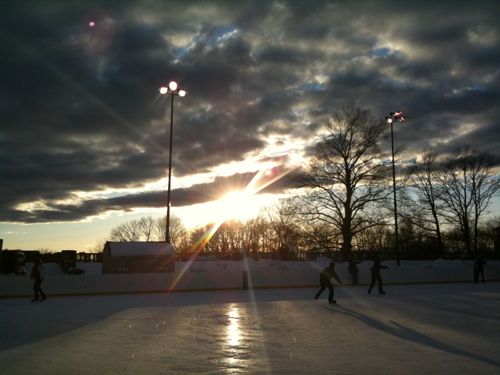
Photograph of the rink at Larz Anderson taken by Grace Guterman at 4:30pm on February 18, 2010, ten days before the last skating day.

– Draw a picture. Make a sandwich. Teach writing.

Grace comes to work with Jane and finds the art supplies.

Grace comes to work with Jane and finds the art supplies.

During a scheduled hour to discuss their upcoming proposal drafts, I asked a group of 10 chemical engineering students to explain to each other their research projects, the rationale, the experimental design, and prior research. They talked productively for a half-hour and listened to each other with curiosity and asked relevant questions. All good. Certainly, we could have filled the rest of the hour with more talk.

I looked at the classroom’s two white boards and one easel pad and clutch of dry erase markers and Sharpies. I invited them, instead, to draw.

In small groups, they drew branching diagrams of their proposed experiments and explained their plans — and, even more importantly, gaps in their plans — to their peers. I walked around. They asked questions about how they might frame their experimental design in their drafts.

My friend and colleague Lisa had the classroom reserved after me, and she came in five minutes before we finished. Later, on the way to the copy machine, I saw Lisa’s students (in a different section of the same class) sprawled on the floor with big pieces of white paper and clustered around the white boards, drawing and gesturing with hands and markers. Continue reading

– It’s here! It’s here!

The table of contents is here!

Those are the words that rung through my mind’s ear as I opened issue number nine of P•M•S poemmemoirstory and saw my name in the table of contents next to “Little Creatures,” an essay on lice and love.

I was thinking of the early scene in the Steve Martin movie, The Jerk, in which the phone book arrives and Navin Johnson cavorts in joy: “The new phonebook is here! The new phonebook is here!” (Relive it at 1:24 in this trailer.) His name, in print! My name, in print!

Alas, though, it’s only a name. If you want to read my essay on experiences delousing my three children, leave me a comment with your e-mail address and a PDF will be yours.

And if you came here looking for the BEST LICE TREATMENT or a LICE REMOVAL MACHINE, which are among the top search strings that lead people to my blog, then let me give you the information you came for: Continue reading

– Anger, on ice

Ice

by Jane Kokernak

In this house
I make the ice. I
fill the tray. Full
rows shimmer and
tremble. Across
to freezer, drops tip
out. All day against
heat a compressor
hums and once snaps
at air. Within, molecules
slower and slower align
until crystal.

Sweating, in one arc
you swing into kitchen,
hands into freezer.
Out comes a matrix
rigid with ice. You
twist. With the crack
of a stick cracking,
matter resists — then
splinters. Your face
relaxes. Your chest
rises and falls with
breath. Water snakes
into cubes:
sighs.

The ice the glass
the water glitter. You
drink. Inside me
solids collide
drift and float.

*

—–

Author’s note: At one time, I was writing poetry like crazy. It seemed to be the way to capture and compress feeling. (The compression was really important to me, as an activity and effect.) Although I don’t think in poems so much anymore, I do believe that the sound of words and prose is important, and when I revise my work, I read it out loud, or read it deliberately in my head. I want to hear the words do something, and I want it to sound like something you could feel. Meaning alone is not enough. Back to this poem: it’s about anger — in particular, how I experience it. A deep freeze. No outbursts or sudden conflagrations for me, just a gathering into this cold black center. An outburst — “the crack of a stick cracking” —  might be more satisfying and productive, if I could pull it off. Can’t. Eventually, it lets go.

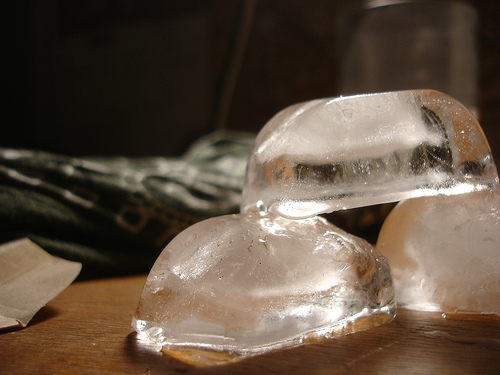
Thanks to Kevin Saff on Flickr for his image “Ice Cubes.”