Fragments of a fall

It culminated in glory.
Ornament

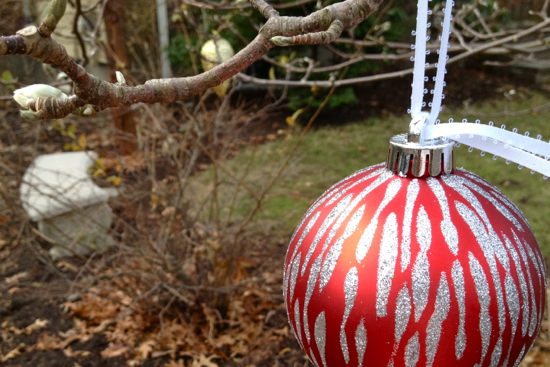
Yesterday Grace and I strung the magnolia and arbor in the front yard with solar LED lights and some glitter balls and gold pine cones we bought last year. Fingers are crossed on the lights charging up today for a show tonight.

The glory, though, is the big final event for one of my favorite classes to work on at MIT, in mechanical engineering: 2.009 Product Engineering Processes. The name of the class might not arouse excitement — it could even evoke an image of a conveyor belt, which the word “processes” always does for me — but the experience of the class, students, and creativity does. Over the term, teams of 16+ students brainstorm, model, test, and prototype an innovative product. This year’s theme was “outdoors.” My two teams, Red and Silver, respectively developed a portable cookpot for campers heated by an exothermic chemical reaction (no flame!) and an innovative hand truck with treads to improve the ergonomics of delivering filled beer kegs from a parked truck to the basement storage areas of bars and restaurants.

If you are curious, you can watch the final presentations for Red’s Heatware and Silver’s Clydesdale by going to the course website (link) and clicking the links in the upper right corner.

Students don’t write formal reports in this class, although there are other writing tasks that I and other communication instructors can advise them on, such as surveys of potential customers and text for a product brochure. There are diverse presentations at milestone reviews that punctuate the development process, and we coach them on those. We also are members of the team, along with lab instructors, and that’s the best part — attending weekly meetings, lurking in the lab as they design and machine parts, and asking the kinds of questions that gets young people to think more critically about their original work. It’s socially rewarding too.
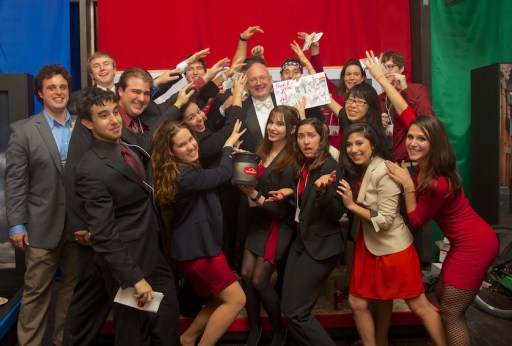
Red Team, Final Presentations, 12/10/2012 -- you didn't know MIT students were adorable, did you?

Red Team, 12/10/2012 — you didn’t know MIT students were this adorable, did you?

And the conclusion is like the last day of summer camp, or (as adults) the week-long writing or arts conference that you loved, and filled to the brim with every emotion: fatigue, worry, friendship, achievement, and anticipated loss. There is relief, but we do miss each other when it ends.

Way back in September, I had tried to schedule my semester to lighten my load for the final two or three weeks so I could give 100% to the product design class. I even jiggered the deadline for a final proposal in another class so that I could read them all before Thanksgiving. (I thought this would be good for the students, too.) That made November packed. Here’s an image of my at-home Homework Center, working alongside Lydia and Grace at the dining room table. It was a grind, but at least we were together.

Girlz_Homework

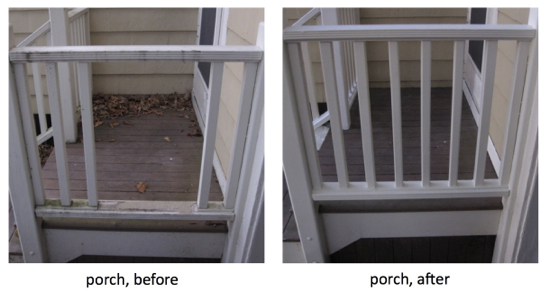
The autumn wasn’t all schoolwork. There was Thanksgiving at my sister Sally’s house with everyone. There was a wonderful, compressed trip to Orlando for a so-so conference and a few vacation days tacked on, which included a day at the Magic Kingdom and a day with the manatees in Crystal River (link). There was the cool fall day I replaced the rotted pieces on our kitchen porch, having gotten advice and help from the mechanical engineering lab director. Very satisfying labor and accomplishment.
Porch_fixed_550

And there were of course high points and engaged students in my other three classes, in biology, nuclear science engineering, and measurement and instrumentation for mechanical engineers.

Some things didn’t get done. There has been very little blogging or writing of any kind that wasn’t a review of student work. I made my peace with that as I was fixing and painting the porch over Thanksgiving weekend, and I realized that, to really do well at a task that is important to me, my motivation cannot be split across different ones. It only creates frustration, and not the productive kind, to be doing one thing and wishing you were actually doing another thing. I did think about writing — I wasn’t all “in the moment” — but it was without that inner torture of feeling as though time was slipping away. I said to myself, “I will come back to it.”

This happened also with skating. Some weeks I practiced only one time. Still, the lessons and progress continue. I recently signed up for a USFSA skills test on February 3rd, and I plan to skate at least three times per week over my winter break to get ready for it. I want there to be meaningful goals without anxiety or self abuse.

Recently, my friend Betsy and I were talking about our lives at midpoint, and what we have learned. We agreed that there is a kind of liberation to letting go the could-have-beens and to narrowing our focus on the parts of life most important to us. We recognize the limits within and without, and we see the tremendous space inside them, especially when the could-have-beens are carved away. I am parent and teacher first — maybe at my core I am a nurturer and steward of children and young people — and other strong interests often seem fitted to those or impossible without them. For example, three writing projects that are simmering on a back burner have something to do with children and the contraries of raising them. Central to my marriage to Jimmy is our shared devotion to, as well as shared burden of, parenting. (Interesting how devotion and burden are often intertwined.)

A couple of days after the December 10th final presentations for 2.009, that wonderful product design class, I went to its farewell dinner and talked to many students and staff. One student asked me if I had observed that the course professor had seemed choked up a bit when he was on stage during the students’ tribute to him, and if I had any thoughts why that might be. I couldn’t speak for the professor, but I did speak for myself and explained that, if you really love teaching, as I do, at some point during that night in particular there may be a moment when you think to yourself, “I have the best job on earth.” You see young people at their best, after weeks and weeks and weeks of work at times creative and at times tedious, and you feel great hope for the world. To be part of something greater than one’s self — so great it may even obscure one’s individual contribution — is transcendent. Tears leak out.

On December 15, Lydia hosted an outdoor skating party for about 100 students from the high school. Back in October I put the deposit down on my credit card and signed the liability paperwork, and she advertised it via Facebook, collected money from kids, and made the playlist. We bought a sheet cake. Jimmy and I were the only designated chaperones, although a couple of teachers came, too, and Eli and Grace also came along, and so did my brother-in-law and niece. I skated, of course, and secretly desired to act out my someday fantasy of being an ice rink guard. Lydia had cautioned me to be almost invisible and not to say anything. I bit my tongue therefore and resisted the temptation to give unsolicited tips to the absolute beginners.

It was not my night. It was theirs.
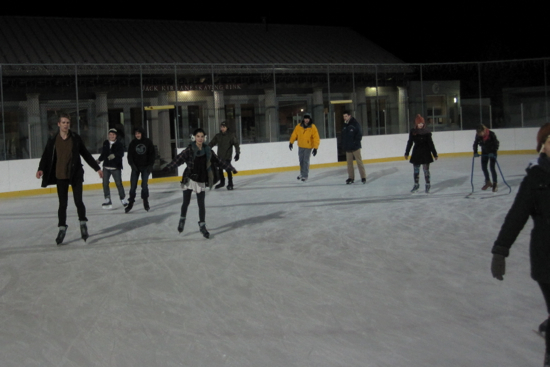
skaters, Brookline, Dec 15
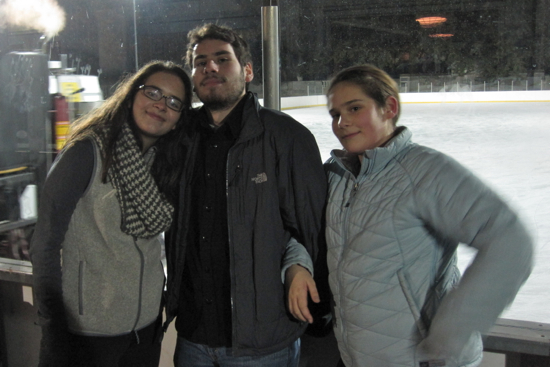
skaters, Brookline, Dec 15

the three mighty Gutermans, Dec 15

the three mighty Gutermans, Dec 15

And now I’m back.

—–
Credit for Red Team photo goes to 2.009 Red Team, Fall ’12, courtesy of Brigitte Morales.

Time of the season

An MIT friend/colleague posted this on her Facebook page:

This week: 22 student meetings (30 minutes each), 12 student presentations to watch and grade, rehearsal for panel talk, planning meeting for IAP workshop, go to conference, give talk, come home… By next Monday I expect to be a shambling, drooling zombie.

Her capsule summary of her week prompted me to print out my Google calendar and annotate it with things I needed to get done the evenings ahead of actual student meetings, deadlines, a rehearsal, a lecture. Last night I left it laid out on the dining room table. This morning it greeted me. I added the coffee.

All those cross-outs on my To Do list on the left, obviously a good thing, explains my absence from blogging. There are especially a lot of drafts to review, and in the bits of free time left over I find myself wanting to read (The Heart Broke In, by James Meek — so good), not write, or go outside instead.

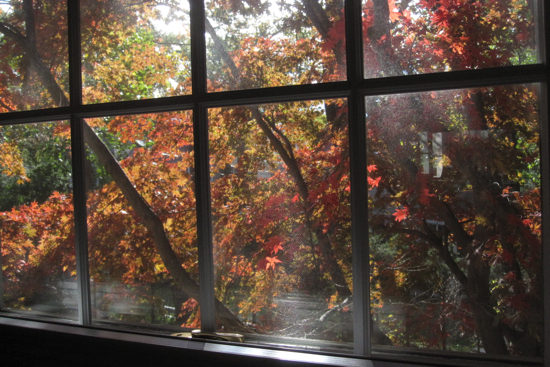
Outside the windows and along the route to work, the trees are changing and getting ready to drop their garments. Watching the big Japanese maple in the backyard, which we can see outside the south-facing windows on the second floor of our house, involves the holding of one’s mental breath. The leaf color turns and turns and turns, the leaf stems continue to cling to the branches as though hanging from their fingertips, a few let go and fall, and one day soon — poof! — the rest will fall, blanketing the grass in a big crimson carpet.

This is autumn: school burdens and tensions and the lead up to the holidays, while nature relaxes. I find myself wishing for the bottom of the To Do list to be reached, quickly, and simultaneously studying the unfolding of the season.

This is autumn too: leaves to rake, fallen branches to pick up, annuals to compost, and small and noticeable steps of progress and pleasure in one’s students (and children!).

We can, at once, be getting things done and in the moment. I do not think life can be lived entirely one way or the other.

—–
The title is of course an homage to the Zombies 1968 song, “Time of the Season.” I associate this with my brother Michael, who was one of the influential disc jockeys of my childhood. This 45 got a lot of play on my parents’ record player.

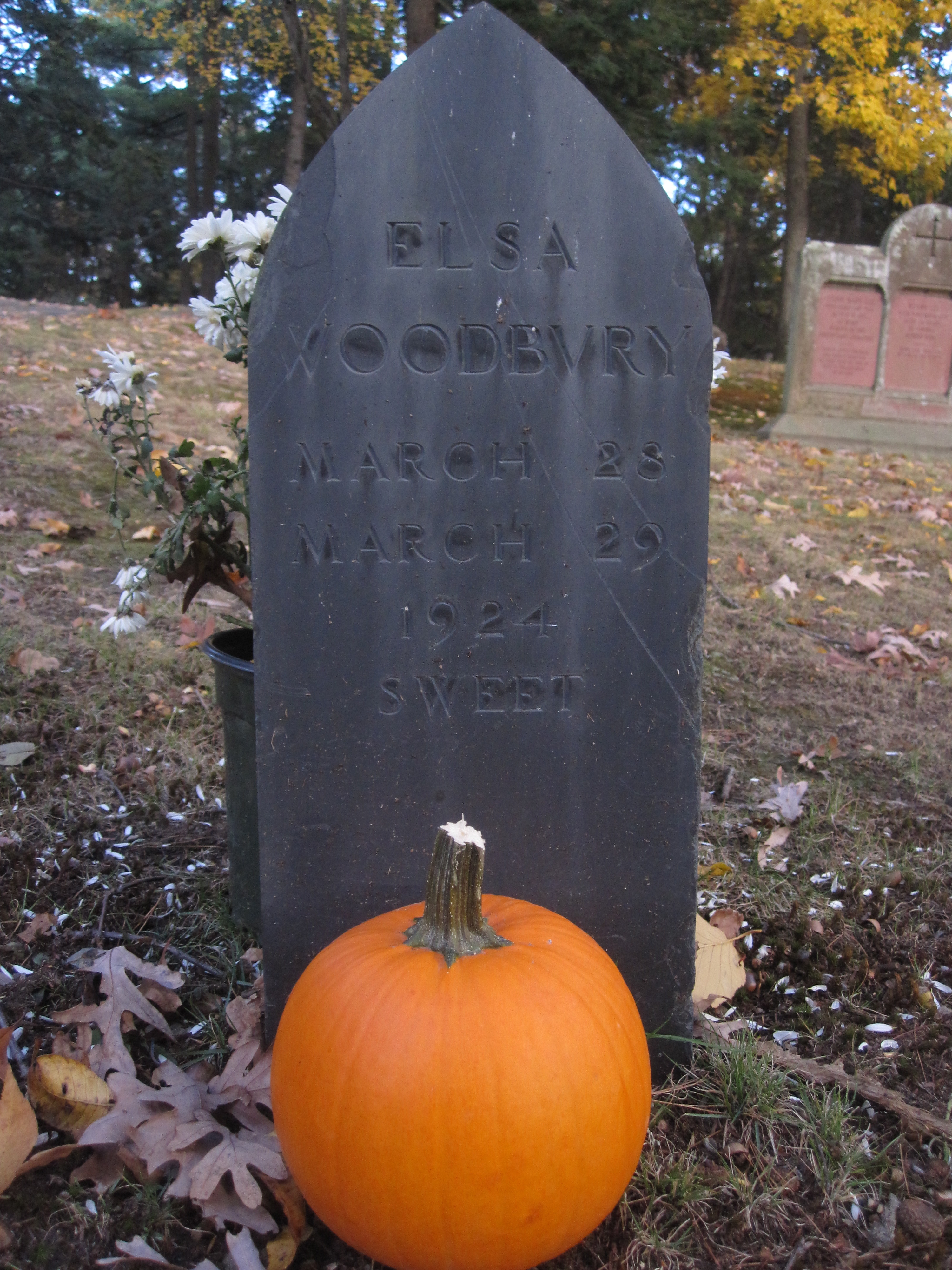
A pumpkin for Elsa Woodbury, d. 1924

Chores to do. Walk to take. We took a break from one and went on the other. Jimmy was enthusiastic, but I had to promise the reluctant Grace that when we hit 20 minutes we’d think about turning around.

Heading to Allandale Farm, we cut through the beautiful Walnut Hills Cemetery.  There are enough paths and gentle hills to make it a decent walk, which we’ve done many times. I thought I had seen all the gravestones of interest. Today this knee-high marker caught my eye for the first time; the small pumpkin at its foot was a beacon.

Infants died for many reasons in 1924, as Elsa Woodbury did at only one day old. The mystery is who is bringing a pumpkin to her grave 88 years after her death. No doubt her parents are dead. Grace speculated that a living, younger sibling could have done it. I wondered about a niece or nephew. Somehow, though, the memory of sweet little Elsa remained powerful enough in a family’s collective mythology that she would get a pumpkin for Halloween, the only one we noticed, by the way, in the cemetery today.

Does anyone else have a story idea for this find?

—–
Photograph by Grace Guterman, at my request.

If a tree falls in an empty conference room, does anybody hear?

Last weekend I went to Orlando, Florida for an academic conference. Two colleagues and I were on the program to present a panel (that is, three integrated short talks) on the teaching and learning opportunities in original research projects for undergraduate mechanical engineers. We had been working on our project since last January: drafting the proposal and later the paper, revising them, drafting the slides, rehearsing, revising the slides, and going over them again. I estimate that about 250 woman-hours went into our talks.

Two people came to our panel. That’s right, two. Oh, and one came 15 minutes late.

This is the thing about academic conferences that everybody knows about but no one does anything about: there are too many panels on the program for the number of attendees, which disperses the audience among too many rooms. Yes, some panels I attended had 30 people in the audience, the size maybe of a class of students. Usually, you hope for at least 8 to 10. But two? Well, that’s just disillusioning, as one of my colleagues said. Our work had almost no effect.

I wonder, selfishly, what else could I have written with the same 100 hours I contributed to the panel? One could say I learned a lot from the research I did (my talk was based on a qualitative study I conducted among students on their experience of a set of assignments), and my colleagues and I consolidated our understanding of our own work through this experience, but, really, to have an audience is better.

In the talks I went to, the best was by keynote speaker Manuel Lima, who presented from his book Visual Complexity: Mapping Patterns of Information (Princeton Architectural Press, 2011). He argues that, as the dominant paradigm for visualizing knowledge has gone from the tree to the network, ideas of beauty must change from an emphasis on symmetry and order to complexity and disorder. Lima’s presentation ranged over history, art, science, Gestalt psychology, and our digital world. He used beautiful, disparate images from handmade manuscripts and other artifacts in surprising ways. Illustrations of trees, like this one from 1202 by Joachim of Fiore (in Lima’s book), gave way to abstract art and in particular a network-like painting, Autumn Rhythm, done in 1950 by Jackson Pollock.

The Tree of the Two Advents (1202)

I sat at a table with Manuel Lima at lunch and heard more about his ideas; I bought his book and got his signature. One always gets something of value out of these academic conferences. I am intrigued by the shift from trees to networks as the paradigm of knowledge in our era and by our ideas of classical beauty giving way to complex beauty.

Networks are not just at the center of a scientific revolution; they are also contributing to a considerable shift in our conception of society, culture, and art, expressing a new sense of beauty. As we continuously strive to decipher many of their inner workings, we are constantly bewildered by their displays of convolution, multiplicity, and interconnectedness. And the most elaborate of schemes are the ones that apparently seduce us at the deepest level. — Manual Lima, Visual Complexity (2011)

This is a big idea, the only one at the conference. My colleagues and I were ready with a well-done yet admittedly modest idea. Is this the thing to do, which Lima has done: dedicate one’s self to bigger ideas and bigger projects?

—–
Image credit: The Tree of the Two Advents, Joachim of Fiore (1202), via Brainpickings.org

Bounty of writers’ insights

Sweet autumn clematis (link) reaches its full beauty in early September and then lasts. I have a few spots of it in the yard — over an arbor in the front, along both sides of the chimney, and climbing up the neighbor’s fence — and this summer it exceeded its usual proliferation while I wasn’t looking. Suddenly, it seemed to explode into my attention. One day I said to a member of my editorial staff, Grace Guterman, “Please, when you have a moment, go out in the yard and take some photos for me!” I wanted to preserve the lushness. She did.

Also this month I have noticed in the news a proliferation of commentary from writers on writing that surprised me in some way. So that I don’t lose these good finds, I’m going to catalog and excerpt below the three that made the greatest impression on me.

1. Brian Martin recommends that writers train like athletes. Excerpts from his article in Tomorrow’s Professor:

Write for 15 to 30 minutes every day. Yes, that’s it: the core requirement is daily writing, at least five days a week, preferably seven.

Coaches expect their athletes – swimmers, runners and so forth – to train daily. Junior athletes are expected to show up for training every day, at the same time. Swimmers put in the laps and runners put in the miles. This sort of training enables dedicated high school athletes to achieve times better than world champions a century ago.

So what were top athletes doing back then? Those were the days of amateurs, usually from the upper class with spare time and access to facilities, who trained when they felt like it, typically on weekends. Very gentlemanly. But their performances weren’t outstanding by today’s standards.

What about writing? Most academics seem to be operating like the gentleman athletes of the past. They wait until they feel like writing. That usually means when they have a big block of time, or are forced to meet a deadline.

Most academics learn binge-writing from doing assignments in high school or undergraduate years. Binging becomes increasingly dysfunctional as tasks become larger. Writing an essay overnight is possible, but completing a 300-page thesis requires planning and sustained work. Continue reading

Writer’s Dozen: Peter Selgin and Limits

This is the fourth in a series of posts, called “A Writer’s Dozen,” on texts that have been important to me as a writer.

When he was in his early 20s and struggling to get started as a songwriter, Peter Selgin was attacked by a black Labrador retriever owned by the woman for whom he was apartment sitting in New York. The dog chomped into Selgin’s left wrist. He underwent microsurgery to address significant scarring around the ulnar nerve that affected feeling in and mobility of the hand. Results were minimal.

This event is described in his essay, “Confessions of a Left-Handed Man,” which is the centerpiece of a new book of essays by the same name. I first read this essay in Best American Essays 2006.

Always a left-handed artist and writer, Peter Selgin knew at age 25 that the full manual dexterity of his dominant hand would not return after the attack and surgery. In the essay he recounts his attempt to train his right hand, which felt like “trying to sing with [his] fingers holding his tongue,” to do what his left hand had always done for him. Around this time he also broke his leg. One night he walked on crutches to the East River with thoughts of killing himself. He had always been the left-handed boy — had identified himself as that — and the mirror opposite of his twin brother George, a right-handed boy who became an economist. At the river that night he had a “good bawl” and “hobbled back” to his room.

Twenty years later, he wrote the essay from a point in time he no longer felt that his left-handedness had any special meaning. It simply was. Furthermore, he continued to write and make art with his compromised left hand. The work he made before and after the injury, though, have “nothing in common” with each other. He calls his style “naive, even primitive,” and he asserts that his “lack of dexterity has freed [him] from glibness, which in turn has delivered [him] from the temptation” to show off.

Even though Selgin’s theme for his essay is humility — he says that, for an artist, “to master humility” is as important as mastering the techniques of his medium — for me, the lesson is about limits that we cannot overcome, that we must work within. There is nobility in this, and necessity, once the sorrow passes. Continue reading

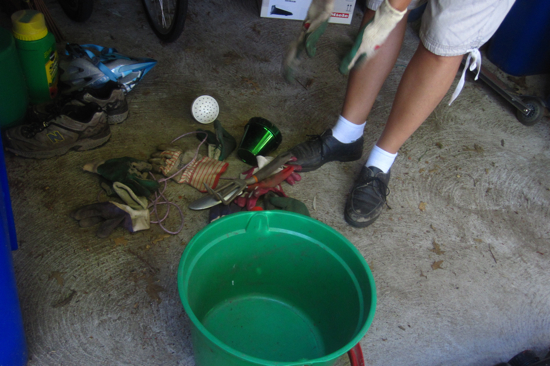
Weeding and thinking

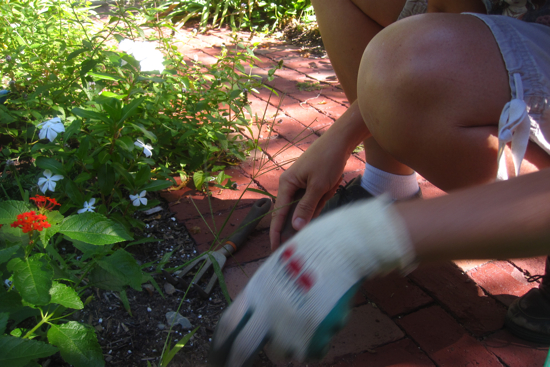
The crabgrass is an invader. Not only has it staked its claim on various islands of the lawn, it has mingled with the flowers in the front yard too. What we call “weeds” is socially constructed, you know. Crabgrass is simply one kind of grass, equal to others, but we don’t like it, we can’t control it, so we think of it as a weed: undesirable and to be eradicated.

I’ll live with it on the lawn — and it only grows out front, where there’s sun — but I dislike crabgrass among the flowers I planted intentionally.


Weeding is good to do early in the day. It focuses the mind and then clears it. Was I procrastinating the semester prep I need to do when I put on my work shoes and gathered the bucket and tools? Yes. If one is putting off something else, though, it is good to at least accomplish another task. Recently I read that the highest-achieving people always do their most difficult work first. Ah, not me. I like a little puttering first, sort of like walking around the block before a run. The warm up, the loosening.

It is satisfying to grab the head of a clump of weeks, pry the dirt a bit from below, and then pull, feeling the roots of the weed pull back and my own gentle force eventually overcome their tenaciousness. Is this similar to the satisfaction dentists, doctors, and even aestheticians feel in their work with the human body? The organism resists; the professional — wilier, and with tools — overcomes. This may also lead to the despair that is sometimes felt in working with the human body, with nature in general: ultimately, its own force or fragility asserts itself and the counter force we apply fails. The river overflows the bank; the freckles proliferate; illness has its way; children grow and become themselves; we age.


Working with one’s hands — and typing does not feel like work with one’s hands, although hand writing does — focuses the mind on the task. There are a set of small decisions to make as well as continual adjustments. To any passerby, I probably look quite still as I weed, just my hands and fingers busy, but I inch my way down the front walk and my mind, meanwhile, buzzes with thought: about the flowers and which ones to plant again next year, about the fall tasks around the corner, about water and my access to an abundant amount of it, and about the burden and pleasure in owning a piece of the earth.

Eli once said it’s so weird that people can own property, a piece of the planet, and when you stop to think about it, he’s right. Surely, we have to live somewhere, but strange that only Jimmy and I have a claim on these particular 7,000 square feet of dirt in Brookline, Massachusetts. And how far down do our rights go? A foot? Down to the sewer and gas pipes? All the way to the center of the earth? I picture a cutaway view of my house on the earth’s crust and the massive sliver of geological layers on which we rest. And if I do own the sliver all the way to the planet’s core, do I also have responsibility for it?

The parts of life that touch me have this awesome responsibility: if I know about it, or am associated with it, I am implicated in its maintenance or outcome. To not take responsibility (and I don’t, always) is to make an active decision to *not* concern myself, to shut off that part of my brain or body that could act. I won’t help (though I could); I won’t care (though I do); I will leave this to someone else.

I’m not borrowing the rhetoric of the self-help movement to assert my need for “me time” (I hate that expression). Occasionally I have this dialog with myself because I am lazy or tired or even because I lose faith in myself.

Continue reading

Writer’s Dozen: Mary Oliver and Sound

This is the third in a series of posts, called “A Writer’s Dozen,” on texts that have been important to me as a writer.

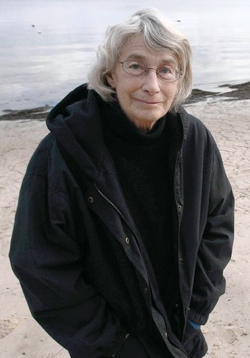
on the Provincetown shore, 2010

Words have more than meaning.

Words have sound, and how words sound affect the quality of something written.

For example, you could use either the word “moist” or “damp” to describe the armpits of a character’s shirt; the meaning — slightly wet — is about the same. And yet the sound of moist, which causes a pressing together of lips to create the mm, a pursing to form the oy, and then a sinister baring of teeth for the soft and hard st, evokes more disgust than the simple, matter-of-fact damp with its softer consonants.

D and p, in fact, are mutes, and m is a liquid. These are terms for types of consonants, grouped into what Mary Oliver calls “families of sounds” in A Poetry Handbook (Harcourt Brace, 1994).

Sounds of words matter — Oliver compares the nouns stone and rock and the commands “Hush!” and “Please be quiet!” — because, as she writes, “there is, or can be, a correlation between the meaning, connotation, and actual sound of the word.”

I love this book for its clarity, simplicity, and helpfulness. At different times in my life, especially my teens and mid-30s, I have had a great impulse to read and write poetry,  with scant formal training in it, and by that I mean no college or grad school poetry workshops. I did, as an adult, take a few classes in poetry through the Brookline Center for Adult Education, where I learned and wrote a lot. (One doesn’t have to get credits to get educated, I say.)

It was around this time I encountered Oliver’s Poetry Handbook for the first time. Over the years, whether I’ve been writing poetry or not, it has been a helpful reference on sound, meter, rhyme, and line breaks. Even if you are more a poetry reader than writer, this book can help you understand how words and combinations of them can do their work.

On rhythm, she writes:

The reader, as he or she begins to read, quickly enters the rhythmic pattern of a poem. It takes no more than two or three lines for a rhythm, and a feeling of pleasure in that rhythm, to be transferred from the poem to the reader. Rhythm is one of the most powerful of pleasures, and when we feel a pleasurable rhythm we hope it will continue. When it does, it grows sweeter. When it becomes reliable, we are in a kind of body-heaven. Continue reading

Imagine the luck of her future second graders

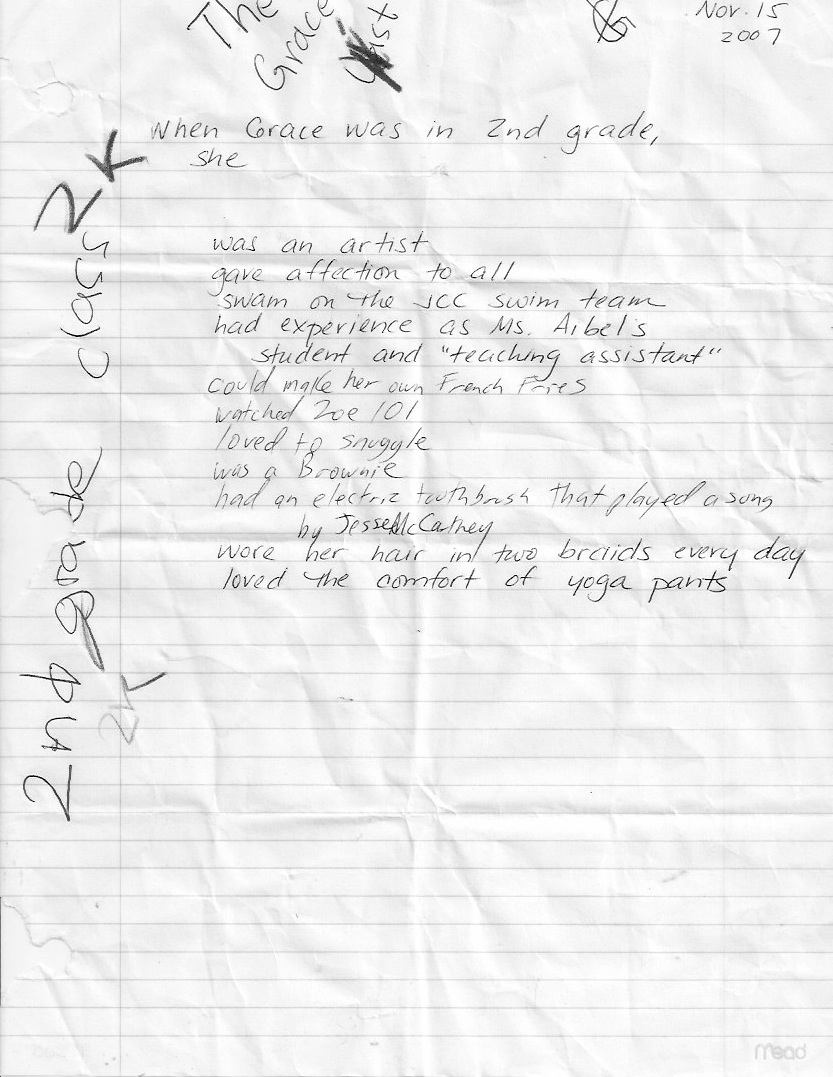
Grace and I have been bitten by the organizing bug, and we are culling our collections. I took four boxes marked “Jane’s Junk” and got them down to one, and Grace has stripped her closet down to the essentials and tackled her desk drawers. Last night she came across a list made five years ago when she was in the second grade. Knowing I like to save the textual artifacts of childhood, Grace handed it to me. You can click on the thumbnail to see the scanned version in full size or read the transcript below.

From the handwriting, it looks like Jimmy and I took turns at dictation. I asked Grace, “What was this list for?”

She replied, “When I was in second grade and thinking about becoming a teacher, I thought it would be neat to be able to tell my second graders some day what I was like when I was their age.”

This is what she was like, as reported on November 15, 2007:

When Grace was in 2nd grade, she

  • was an artist
  • gave affection to all
  • swam on the JCC swim team
  • had experience as Ms. Aibel’s student and “teaching assistant”
  • could make her own French fries
  • watched Zoe 101
  • loved to snuggle
  • was a Brownie
  • had an electric toothbrush that played a song by Jesse McCartney
  • wore her hair in two braids every day
  • loved the comfort of yoga pants

Wouldn’t it be wonderful if Grace, or Eli or Lydia, became a teacher? Then there would be three generations of us: my father, my mother-in-law, I, and one of the kids. Now that would be a family legacy.