Years ago I learned the phrase “transition time” from one of the kids’ preschool teachers. A bridge from one kind of activity to another, it’s something that all children need and something that some have trouble with. For example, if a child is engrossed in building with Legos, he might be unable or unwilling to follow directions to put away the toy and put on his coat if he has not first been given a warning as well as some time to transition from his play into the practical.
Transitions help us cope with change by easing us forward. Routines help, too.
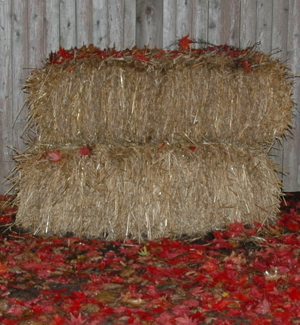
Two days before Thanksgiving, on November 20th, it snowed lightly. There were still plenty of leaves on the ground, and the Japanese maple in our backyard, which bursts every fall from green to crimson and then drops its leaves within a few days, still wore half its foliage. I stood in the backyard, trying to gauge when the leaf guys would come to finish their work for the year and, after that, when I would have an hour or two to break open the bales of hay and mulch around new shrubs and divided plants.
I stood in my neighbor Gail’s yard and looked into my own. There was a soccer ball left behind from some game that did not involve me; there were the patient hay bales against Bob & Mary’s fence, the carpet of crimson leaves, and a toddler picnic table under the maple.
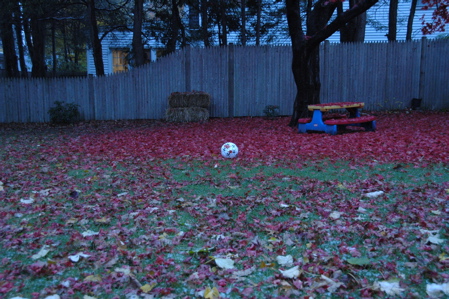
I have no toddlers in my house, and won’t again. The sight of that leaf-covered picnic table, too small for any of our children, reminds me of its redundancy. At best, it’s an artifact. I stood there for a long time and looked at it.
What happens to knowledge when it is not applied to daily use? I have this expertise in caring for the newborn and very young: feeding, washing, handling, soothing, delighting, lugging. I no longer need to mash up anyone’s food, wash a boy’s hair while protecting his eyes, or grab a girl up and out of a sandbox. Now that there are better music makers in this house than me, I haven’t sung anyone an invented lullaby in ages. (One of my lulling hits: “You’re A Baby.”)
Does such knowledge disappear? Is it transformed and applied to other uses? Does it go underground, and hibernate?
 The leaf guys came on a clear day and vacuumed up the red leaves. Soon after, it got cold – bitterly – and we got busy here. It has since snowed again; the stray leaves that fell after the final cleanup are clumps under snow. The brilliance of the fall is a memory. I wonder if I missed my chance to lay down the hay. Like a child sometimes, I don’t like to be rushed, and I waited too long. It’s December 9th and gardening is over for the year.
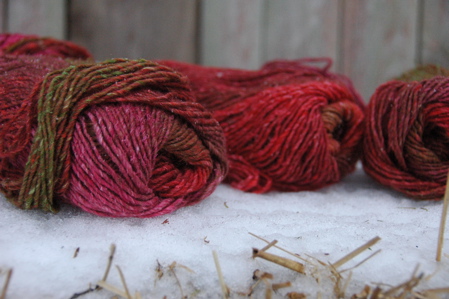
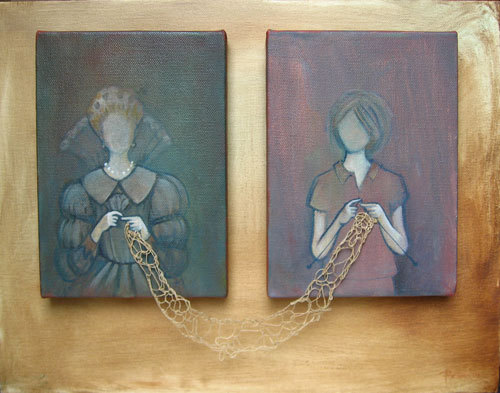
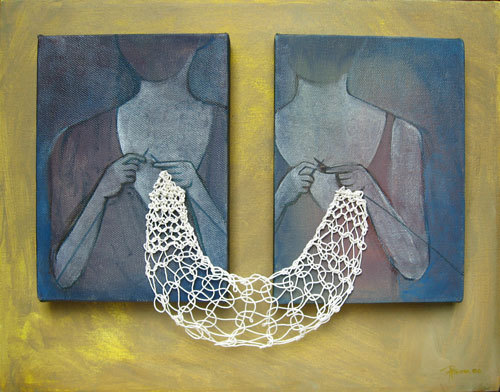
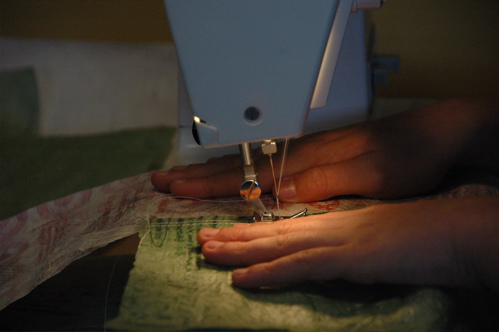
I’m not a person to spend the winter months dreaming of what I’ll plant in the spring. I put those thoughts aside until signs of thaw, and then I feel, too, as if I’m thawing out. My interest in the yard reawakens. In the meantime, I keep my hands busy in other ways. Knitting is one of them.
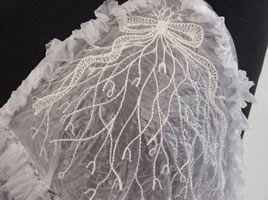
 leaf stitch word