In class, giving my students some advice on adding context to their scientific reports on Pfu DNA polymerase, I suggested that they return to their course texts. “Make sure you digest the lab manual.”
I heard myself and smiled. I looked around the table; some of them were smiling, too.
“I mean,” I said, “Make sure you read the lab manual carefully and digest the information in it. Please don’t actually eat it.”
The mind works associatively. My verb/object error opened an unlikely file drawer in my head, one that contains moments from NBC’s 30 Rock. Deciding to digress — and I rarely exploit my students as audience, but this time I did — I told them where my internal attention had landed.
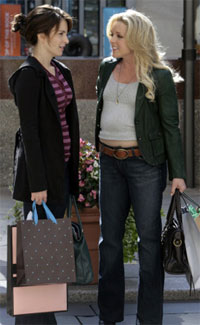
30 Rock: Liz and Jenna
“Did anyone see that 30 Rock episode where Jenna is on the Japanese paper diet?”
I looked around. They waited; they smiled; no one said anything. I continued.
“Jenna is one of the stars of a television comedy show, and she’s trying to lose weight. All she eats is paper. In the show it’s called the Japanese paper diet.” I paused. “And so, after I told you to eat the lab manual, I pictured you all eating paper and thought of this.”
Students laughed. It was so nice of them.
Later, in the van with Jimmy and the two girls, I share the classroom anecdote. From the way back, Lydia hoots. “Mom, it’s not called the Japanese paper diet! It’s called the Japanese porn star diet!” Lydia, who also watches the show, is correct.
Oh, god. I always meddle, unconsciously, with gags, stories, and jokes, and get them wrong. My own twists make sense to me, but not usually to anyone else.
In this case, however, I’m so glad I misremembered the diet’s name (although I did remember the gist of the joke: Jenna was eating all the paper she wanted). There are some things you can say to your students, and some you cannot. To mention a porn star diet in a science writing class, in any class?? Totally inappropriate. A paper diet, though? Just quirky, I hope.


 leaf stitch word