– I’ll take reality.

I have always preferred reality.

I was the child who read the Little House series, Nancy Drew, Tree Grows in Brooklyn, Jane Eyre, Secret Garden, Pig Man, and Anne of Green Gables.

And like my daughter Lydia, I have always liked facts. One spring, when I was about 16 years old, I took a stack of books out of the library’s nonfiction section on farming, gardening, and vegetables. (That summer I also attempted a 10 x 15′ garden on a clayey waste plot in my family’s back yard. What I recall is that lettuce grows quickly, and slugs like to make a home among lettuce leaves, which a person finds out when she holds that salad lettuce up to her mouth and sees a baby crawler on a leaf.) Another time I took out a less goal-oriented selection of books on the human body — a bunch of owner’s manuals. (I remember a set of photographs from a dermatology book on effects of aging, and how an older person could pinch skin on the back of her hand and it would stay in a little teepee shape for a second or two. I tried this on my own hand then and could not imagine a little skin teepee as a possibility.)

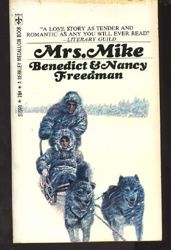
In my fiction reading, as much as I followed plot I liked learning how people did things with their hands: laundry in big tubs, food over an open fire, sleeping 3 or 4 to a bed, toys from sticks and rags, and treatments from poultices (ah, Kaiser Pease’s onion bath in Where the Lilies Bloom). When I picked up Mrs. Mike again, at least 30 years after I first read it, it was to find the description of an emergency amputation that has stayed with me:

I filled a kettle. I lifted it to the stove. The cries drew me back. His nails dug long furrows in the wood of the table. His dark eyes rolled back under his lids, leaving white, unseeing holes. The smooth muscles moved in Sarah’s arms. Back and forth, back and forth. The trap bumped and clanged against the table. Sarah’s strong man’s hand pressed the saw’s teeth deeper into the wound. It quivered, it quivered like jelly. A strange laughter stirred me. Mother and child, I thought. Mother and child. Then Sarah begin hacking. The bone chipped and splintered. I looked at her face, at the clamped lips! I looked at her hands. I thought, how can she do it! I looked again at her face, relentless and calm… His body lay under her hands, twisting, screaming, while she hacked at him calmly with a saw. I stared at a flap of hanging flesh.
Continue reading

– Be good to it.

It’s important to gratify the body.

Those are the words of a yoga teacher. She said them before our brief rest period. I thought of them again when, at the end of the hour on Wednesday, we massaged our own faces and scalps.

A person can interpret this value any way s/he likes. I do not think, however, that Portia meant we should press our faces into a bag of Doritos or have yet another cup of coffee, which is what I am doing right now, at my desk.

There are many things she might have meant. This is worth thinking about.

– What death tastes like

I’m upstairs, in the bathroom, about to hop in the shower (as my mother would say. One can’t actually step into the shower, or take a shower. Hop, we must.).

Suddenly, from downstairs I hear running feet, the slam of a door, adult gagging sounds, and child screeching ones. I go to the top of the stairs. Through my mind runs all the first aid procedures I’ve learned related to choking and heart attacks.

“What’s happening?!”

I hear Grace, off stage, yell: “Dad’s gagging.”

I yell back: “What’s wrong?”

Jimmy walks, coughing, to the bottom of the steps. “Oh, my god, it’s the DayQuil. It’s horrible.” He drinks water from a cup.

Lydia joins me on the upstairs landing. Like Jimmy, she’s suffering from a sore throat, and she was the first one today to sample the orange liquid cold medicine.

“It can’t be that bad,” I say to both of them.

Lydia rolls her eyes at me. “Mom, it literally tastes like drinking death.” (Note: emphasis Lydia’s.)

And now I know.

Meditation on adult fears

In graduate school, at the first meeting of an American poetry seminar that turned out to be wonderfully heavy on Emily Dickinson, the professor asked us to introduce ourselves by going around the table and disclosing our worst fears. As soon as she said it, the professor withdrew the prompt. “No, don’t say your worst fears, say your second worst fears. It’s too terrible, as an adult, to claim your worst fear. ” She paused. “What if it came true?”

My second worst fear is a wood chipper, those little green or orange monsters with big metal teeth that get lugged around by tree jockeys and that eat branches and trunks. Last fall, on my way to work, I saw one on Amory Street in Brookline and sticking out of it was not a mouthful of hemlock but the blue-jeaned legs and ass of a man. I was riveted and terrified. As I drove closer I could tell that he was intentionally face first inside the jaw, fixing it, I gathered. A couple of other tree guys stood around, unperturbed and waiting.

A healthy respect for the destructive power of machines may be rational (as may be the fear of waxing, which was the pick of another female grad student in my class). However, sometimes a fear grows until its size in one’s imagination becomes irrational.

A friend of mine, an artist, has an ex who has diabetes, as I do. Things are not going well for him, and I encouraged her to encourage him to make his way to the Joslin Diabetes Center, where he would get help with his medications, diet, exercise routine, and even his feelings of discouragement. “They will take care of all of him,” I assured her. The thought of this buoyed her. Recently she wrote to me: “Would you be willing to talk to him? He wants to go and he seems reluctant to go.” Ah, of course. Continue reading

– Last skating day

We missed the last skate, Grace and I.

By last skate, I mean that we missed the last day of the season at the outdoor rink at Larz Anderson Park.

On Sunday night, the last skating day, the one we missed, I sat downstairs in the living room, writing comments on report drafts. Around 10 o’clock, I heard the sound of weeping. A child. I went upstairs and located Grace, who had woken up. She cried softly, with a kind of tinkling music that probes your thoracic cavity with its fingertips.

“What’s wrong? What’s wrong?” I murmured.

She didn’t move or thrash. With her lips a little mashed by the pillow she said, “I just feel sad. I don’t know.”

“Sad about something?” I asked.

“Just sad.” She paused; she wept. I could see the sparkle of her opened eyes even though the room was dark, because the light was on in the hallway and her wet corneas caught it. “We missed the last skating day today.”

“I know. I’ve been thinking about that. We should have made ourselves go.”

Grace sighed. “It’s that, but it’s not just that.”

I know that, too. Sometimes a person just feels sad, and a concrete event amplifies the sadness, but it doesn’t entirely explain it.

We adults often believe that we own those deep emotional cavities that inexplicably open up inside a person from time and time. While they last and remain open, nothing will fill them. One thing that being a parent has taught me is that children experience the unfillable eternity, too.  Lydia, at six, sobbing, retorted when I asked her what was wrong: “If I knew why I was crying, I wouldn’t be crying!” Eli, at ten, soberly informed me: “Mom, if you think that kids are carefree, you don’t know.”

What is the comfort when there is nothing to say? On Sunday night, the last skating day, I climbed into bed with Grace; I was tired anyway. She flung her arm over me. We slept together for an hour, animal to animal. Eventually I got up, looked again at her, and shuffled to my own bed.

—–

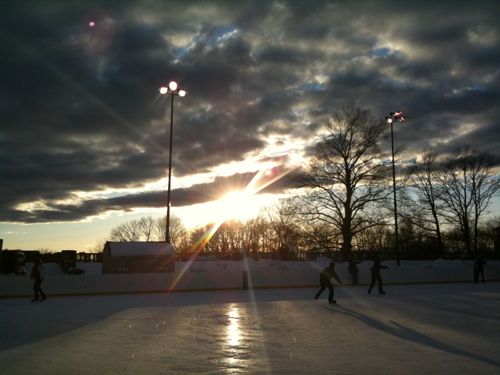
Photograph of the rink at Larz Anderson taken by Grace Guterman at 4:30pm on February 18, 2010, ten days before the last skating day.

– It’s here! It’s here!

The table of contents is here!

Those are the words that rung through my mind’s ear as I opened issue number nine of P•M•S poemmemoirstory and saw my name in the table of contents next to “Little Creatures,” an essay on lice and love.

I was thinking of the early scene in the Steve Martin movie, The Jerk, in which the phone book arrives and Navin Johnson cavorts in joy: “The new phonebook is here! The new phonebook is here!” (Relive it at 1:24 in this trailer.) His name, in print! My name, in print!

Alas, though, it’s only a name. If you want to read my essay on experiences delousing my three children, leave me a comment with your e-mail address and a PDF will be yours.

And if you came here looking for the BEST LICE TREATMENT or a LICE REMOVAL MACHINE, which are among the top search strings that lead people to my blog, then let me give you the information you came for: Continue reading

– Trouble with avatars

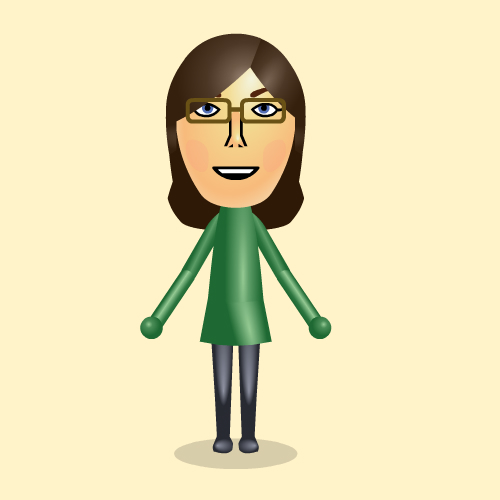
After Christmas, I made myself a Wii Mii on the kids’ new console and thought, “There’s something not quite ‘Jane’ with this avatar.” No medical device, and no way to make or add one.

On New Year’s Day, we went to see Avatar: 3D as a family. I enjoyed the movie, yet it bugged me. And while I’ve been reading lots of smart commentary on the web about the film and its racism, sexism, and colonialism, I’ve come across nothing on the disability of protagonist Jake Sully, an ex-Marine in a wheelchair, and its relationship to the plot.

So I wrote about all this trouble with avatars, here.

—-

Note: If you don’t have Nintendo Wii and still want to see what your Mii might look like, try My Avatar Editor, which Rosemary pointed me to.

– Presentation of self

Hide450

Once in a while, if someone knows or notices that I wear an insulin pump, that person says to me, “Don’t you love it?”, gushing on the word love.

This happened to me recently, during my annual check-up. I was sitting on the table with a paper gown wrapped around me and talking to my doctor, whom I like, and the medical student who was observing. It was my doctor who asked the question and gushed on “love.” Clearly, even though it was an endocrinologist and not she who had prescribed it for me, she considered the pump a marvel. As miniature devices go, this one is indeed remarkable in what it can do.

Because she is a doctor, and because I feel able to speak frankly to her, I replied honestly: “No.”

Dr. H.’s lips pressed together and then broadened into a smile, which I took as a signal: Go on.

I elaborated.  “Sure, I appreciate the technology, and it’s more convenient than multiple injections, but, no. Loving it would be like being an amputee and loving a cool prosthetic leg, when what I want is my real leg.” Continue reading

– Words that cannot be said

PagesWhen I was a child, there were words forbidden in our household.

The following were the big three. Really, these are the words I recall my mother itemizing, after she announced: “There are three words I don’t want to hear.”

I am about to write them, which is a kind of saying.

Stupid

Hate

Kill

My parents had five children. While that made for a lot of fun, it made for friction, too. The forbidden words were ones that are most often useful in situations involving conflict. Say my sister Sally and I were playing the card game Spit. I’m older, but she was faster. In the heat of the game, when I suspected she was on the verge of winning, it would have been normal for me to growl at her and bark, “You’re so stupid and I hate you. I’m gonna kill you!”

But, I didn’t, because the words were forbidden. And just now, typing them? I felt very uncomfortable and even queasy. Those are not my words.

In the house I grew up in, we sat down together every night and ate a meal that my mother, usually, prepared. (Once in a while my father cooked.) It must have been hard to create a menu that all seven of us would find pleasing, day after day. I remember liking almost everything, or at least being willing to eat almost everything put in front of me. Still, my brothers and sisters and I each had our own personal limit. Me? Creamed corn. My brother Michael? Deviled ham sandwiches. (Sally, Emily, Brian: What were your dislikes?) Nevertheless, we could not say, “I hate creamed corn.” Instead, my mother recommended we phrase our distaste this way: “I don’t care for creamed corn.” Wordy, indeed, yet tactful.

My parents also preferred real words for objects, and not slang, especially when it came to the body and its processes. Continue reading